


What's Happening?
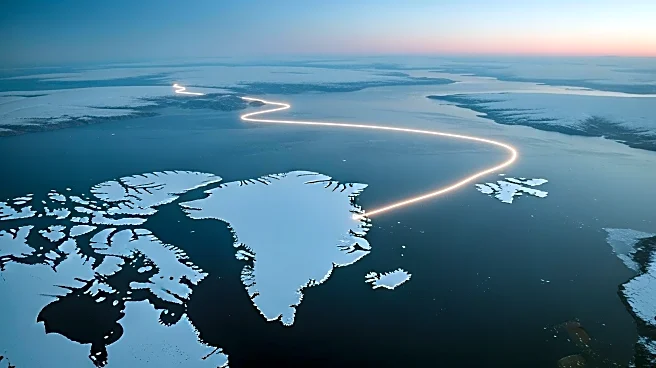
Greenland, a Danish territory known for its massive ice sheet, has recently been highlighted in the news due to President Trump's suggestion that it should become part of the United States. Despite its name, Greenland is predominantly icy, a fact that has puzzled
many given its misleading name. The name 'Greenland' was coined by Erik the Red, a Viking, as a marketing strategy to attract settlers by giving the island a more appealing name. Historically, Greenland has been covered by ice for millennia, although recent studies indicate that parts of the island are becoming greener due to climate change. Over the past three decades, approximately 11,000 square miles of Greenland's ice sheet have melted, which is slightly larger than the state of Massachusetts.
Why It's Important?
The suggestion by President Trump to incorporate Greenland into the United States brings attention to geopolitical interests in the Arctic region, which is becoming increasingly significant due to climate change and the potential for new shipping routes and natural resources. The melting ice in Greenland is a critical indicator of global warming, impacting sea levels and global climate patterns. The historical context of Greenland's naming also highlights the long-standing human influence on geographical perceptions and settlement patterns. The potential U.S. interest in Greenland could have implications for international relations, particularly with Denmark and other Arctic nations, as well as for indigenous communities living in Greenland.
What's Next?
If the proposal to acquire Greenland were to be pursued, it would likely involve complex negotiations with Denmark and require consideration of the rights and wishes of Greenland's indigenous population. The international community may react with varying degrees of support or opposition, depending on geopolitical interests. Additionally, the ongoing effects of climate change on Greenland's ice sheet will continue to be a focus of scientific research and environmental policy discussions, influencing future international climate agreements and strategies.
Beyond the Headlines
The discussion around Greenland's potential integration into the United States also raises questions about the ethical implications of territorial expansion and the historical context of colonialism. The melting of Greenland's ice sheet serves as a stark reminder of the urgent need for global action on climate change. Furthermore, the cultural and historical significance of Greenland's indigenous communities must be considered in any future developments, ensuring that their voices and rights are respected in international dialogues.