





What's Happening?
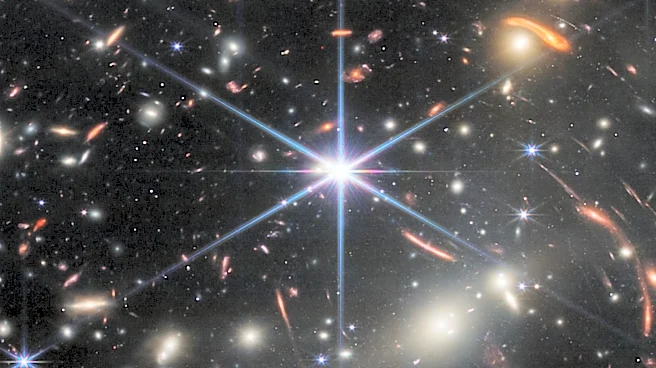
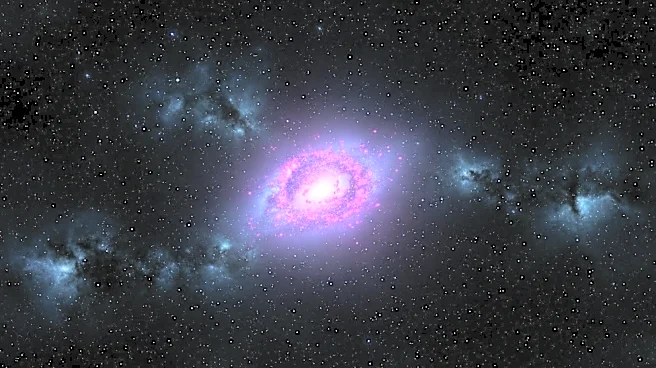
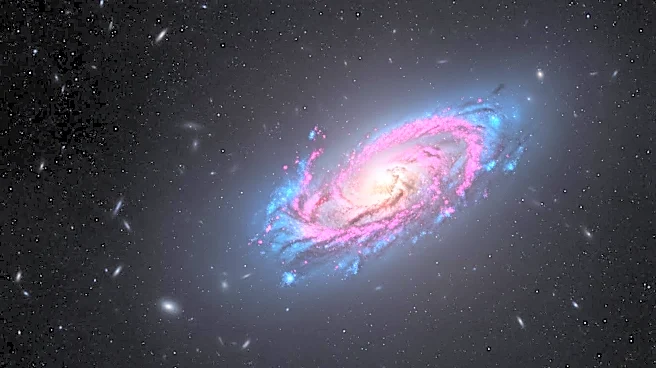
The galaxy JADES-GS-z14-0, observed by the James Webb Space Telescope, formed just 290 million years after the Big Bang, presenting a challenge to current astrophysical models. This galaxy is unexpectedly large, bright, and chemically enriched for its
age, suggesting that early galaxies developed more rapidly than previously thought. The galaxy's redshift measurement places it as the most distant confirmed galaxy, with its light originating when the universe was only 2% of its current age. The presence of oxygen, detected by the ALMA array, indicates that multiple generations of stars had already formed and died within this early period.
Why It's Important?
This discovery questions existing theories about the speed of early galaxy formation and the processes involved in star and element creation. It suggests that the early universe was capable of building complex structures much faster than models predicted, prompting a reevaluation of our understanding of cosmic evolution. The findings could lead to new insights into the conditions of the early universe and the mechanisms that drive galaxy formation.
What's Next?
Further studies will focus on determining whether these early galaxies are as massive as they appear or if their brightness is due to other factors, such as an unusual first generation of stars. Researchers will also continue to measure the chemical composition of other early galaxies to see if JADES-GS-z14-0 is typical or an anomaly. These efforts aim to refine our understanding of early universe conditions and the efficiency of star formation processes.