



What's Happening?
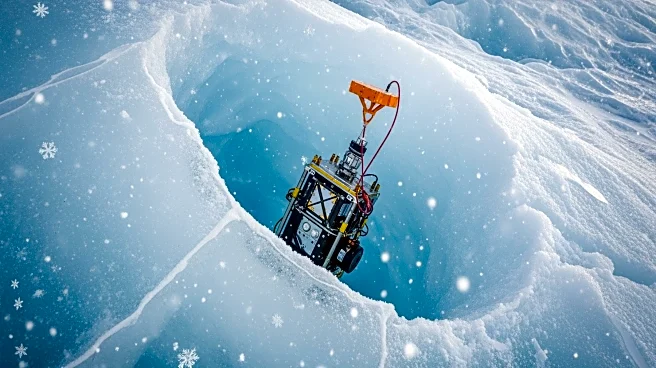
A robotic float, lost for nearly nine months beneath Antarctica's ice, has resurfaced with valuable ocean data. Deployed by Australia's CSIRO in 2020, the Argo float was initially launched to collect ocean measurements near Totten Glacier. It drifted
beneath the Denman Ice Shelf, losing GPS contact, but later returned with temperature and salinity data from previously unexplored regions. The float recorded 195 profiles over two and a half years, providing insights into the thermal systems beneath the ice shelves.
Why It's Important?
The data collected by the float offers a rare glimpse into the conditions beneath Antarctica's ice, crucial for understanding the region's impact on global sea levels. The findings reveal a fragile thermal system where colder and warmer layers meet, highlighting the potential for significant changes under continued warming. This information is vital for refining climate models and predicting future sea level rise. The success of this mission demonstrates the potential for robotic floats to monitor polar regions, offering a cost-effective method for gathering data in challenging environments.
What's Next?
The CSIRO team plans to deploy similar floats in other underexplored regions of Antarctica to continue gathering data. While the method has limitations in navigation, it provides a unique opportunity to collect direct ocean data beneath massive ice structures. The information gathered will help improve climate models and inform strategies for mitigating the impacts of climate change.