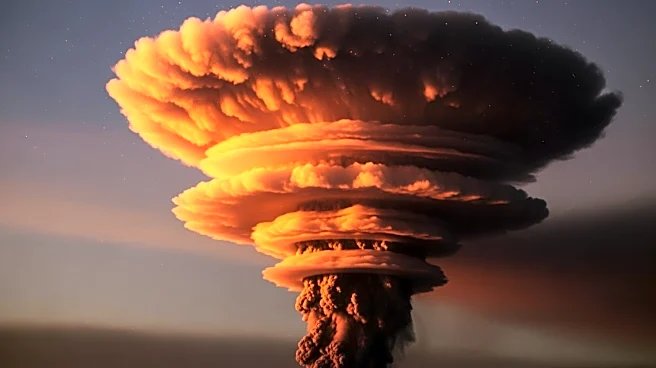







What's Happening?
The 2022 eruption of the Hunga Tonga-Hunga Ha'apai volcano has been analyzed in a new scientific assessment, revealing unprecedented impacts on the stratosphere. The eruption injected approximately 146 teragrams of water vapor into the stratosphere, significantly
more than any previous recorded event. This water vapor cooled the stratosphere by 0.5 to 1 degree Celsius, contrasting with typical volcanic eruptions that warm the stratosphere through sulfur dioxide emissions. The eruption's plume reached 35.4 miles into the sky, marking it as the highest volcanic plume ever recorded. The eruption also caused a unique combination of atmospheric and conventional tsunamis, affecting global sea levels.
Why It's Important?
The findings from the Hunga Tonga eruption challenge existing scientific understanding of volcanic impacts on the atmosphere. The cooling effect on the stratosphere, rather than the expected warming, could influence future climate models and predictions. The event highlights the need for global cooperation in monitoring and understanding rare volcanic phenomena. The extended presence of water vapor in the stratosphere may have long-term implications for atmospheric conditions, potentially affecting weather patterns and climate research.
What's Next?
The elevated stratospheric water vapor is expected to persist for several more years, which could continue to influence atmospheric conditions. Scientists will likely focus on monitoring these changes and their potential impacts on global climate patterns. The event underscores the importance of international collaboration in studying and responding to such significant natural occurrences.
Beyond the Headlines
The eruption's impact on the stratosphere raises questions about the potential for similar future events to alter atmospheric conditions. The unique combination of tsunamis also suggests new areas of research in understanding the interactions between atmospheric and oceanic phenomena. The event may prompt a reevaluation of how volcanic eruptions are factored into climate models and predictions.