
What's Happening?
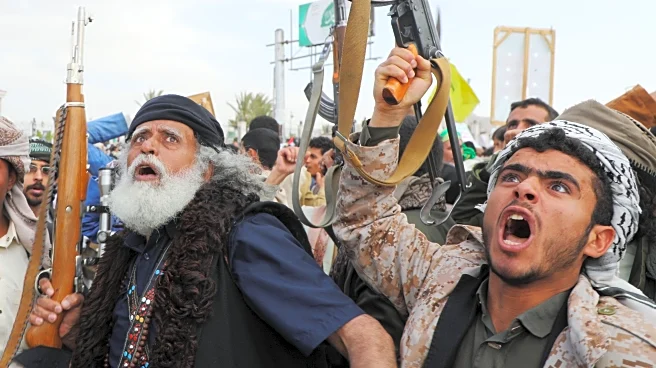
Yemen's Houthi rebels and the Saudi-backed Yemeni government have reached a significant agreement to conduct a large-scale prisoner exchange. This deal involves the release of approximately 1,700 Houthi detainees
in exchange for 1,200 prisoners held by the opposing side, including seven Saudi nationals and 23 Sudanese. The agreement was signed under the supervision of the United Nations special envoy for Yemen and the International Committee of the Red Cross (ICRC). The UN special envoy, Hans Grundberg, described the agreement as a positive step that could alleviate the suffering of detainees and their families. This development follows a 12-day meeting in Muscat, Oman, and represents the largest prisoner exchange between the two parties to date.
Why It's Important?
The agreement marks a crucial humanitarian step in the ongoing efforts to de-escalate the conflict in Yemen, which began in 2014 when Houthi forces seized the capital, Sanaa. The conflict has resulted in significant loss of life, with a 2021 UNDP report estimating around 377,000 deaths, many from indirect causes like lack of food and healthcare. The prisoner exchange is a rare area of progress in the conflict, which has seen limited success in peace negotiations. This deal could serve as a confidence-building measure, potentially paving the way for further dialogue and reducing hostilities. It highlights the role of international organizations like the UN and ICRC in facilitating humanitarian efforts in conflict zones.
What's Next?
Following this agreement, there may be increased pressure on both sides to engage in further negotiations aimed at achieving a more comprehensive peace settlement. The international community, particularly the UN, is likely to continue its efforts to mediate and support dialogue between the parties. The success of this prisoner exchange could encourage additional humanitarian measures, such as ceasefires or aid agreements, to address the dire humanitarian situation in Yemen. However, the path to lasting peace remains complex, with deep-seated political and territorial disputes still unresolved.