

What's Happening?
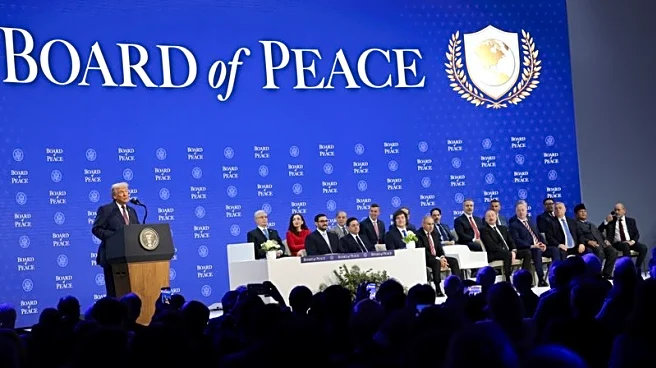
Jared Kushner, former White House senior advisor and son-in-law to President Donald Trump, unveiled a comprehensive plan for the reconstruction of Gaza at the World Economic Forum in Davos. The proposal, supported by President Trump, aims to transform
the war-torn region with a $25 billion investment in modern infrastructure, luxury waterfront properties, and new urban centers. The plan, dubbed the 'Board of Peace,' envisions dividing Gaza into distinct zones for development, with a focus on creating a vibrant urban environment. Kushner, a real estate developer, suggested that the reconstruction could be completed within two to three years. The plan includes the construction of over 100,000 housing units, educational and medical facilities, and a focus on coastal tourism with luxury accommodations.
Why It's Important?
The proposed reconstruction plan for Gaza is significant as it aims to address the severe humanitarian crisis in the region, where over 90% of residential buildings have been damaged or destroyed. The initiative could potentially improve living conditions for the residents of Gaza, providing essential infrastructure and services. The plan also represents a substantial economic opportunity, with funding expected to come from the private sector, offering 'amazing investment opportunities.' However, the proposal is not without controversy, as it follows previous contentious statements by President Trump regarding the U.S. role in Gaza. The plan's success could influence future U.S. involvement in Middle Eastern reconstruction efforts and impact regional stability.
What's Next?
The next steps for the Gaza reconstruction plan involve securing private sector investment and negotiating preferred tariff and access rates with participating countries. The initial 100 days of the plan's implementation will focus on humanitarian efforts, including restoring essential infrastructure and clearing rubble. The plan's progress will likely be closely monitored by international stakeholders, and its success could depend on maintaining a stable ceasefire in the region. The proposal's reception by the international community and local populations will be crucial in determining its viability and long-term impact.
Beyond the Headlines
Beyond the immediate reconstruction efforts, the plan raises questions about the long-term political and social implications for Gaza. The proposal's emphasis on luxury developments and tourism could lead to significant cultural and economic shifts in the region. Additionally, the plan's focus on private sector investment highlights the growing trend of privatization in international development projects. The ethical considerations of such a large-scale redevelopment in a conflict zone, particularly regarding the displacement of local populations and the prioritization of luxury over basic needs, will likely be subjects of ongoing debate.