




What's Happening?
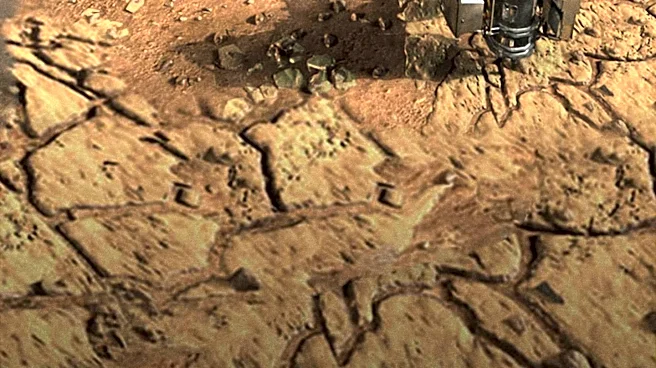
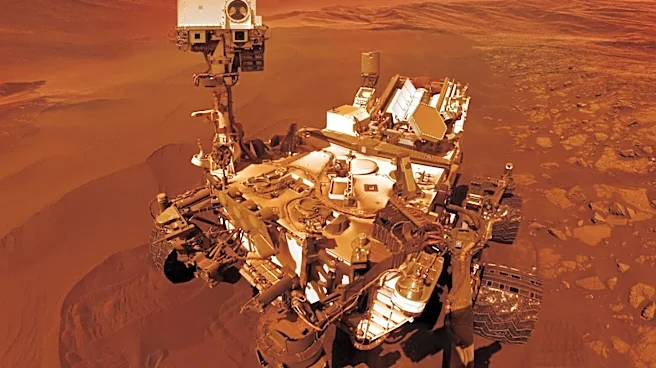
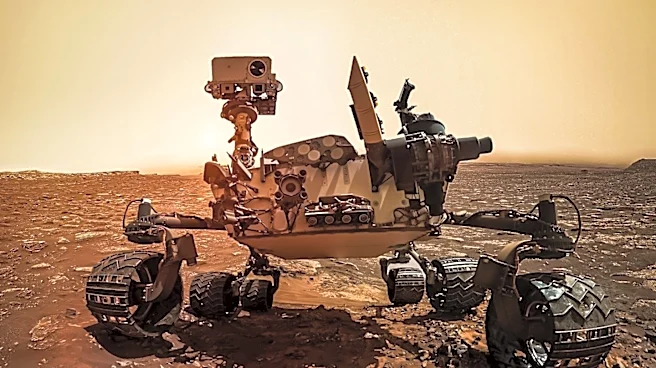
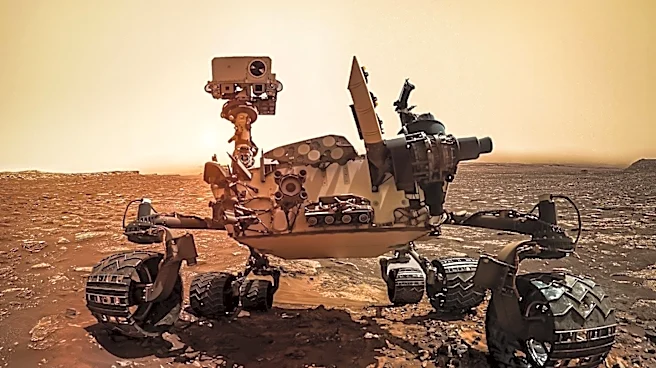
NASA's Curiosity Mars Rover is currently exploring a potential 'erosional supersurface' on Mount Sharp, Mars. This geological feature, identified through orbital data and images, represents areas where sediment layers have been stripped away by wind or water
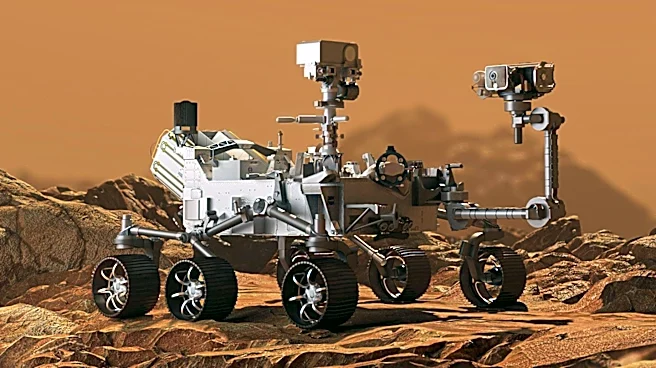
before new layers are deposited. The rover, using its scientific instruments, is examining the composition and geometry of this feature to better understand Martian geological history. The team has been focusing on imaging the supersurface from various angles and analyzing rock compositions at the site. This exploration is part of Curiosity's ongoing mission to study the sedimentary layers of Mount Sharp, providing insights into the planet's past environmental conditions.
Why It's Important?
The discovery and study of an erosional supersurface on Mars are significant for understanding the planet's geological history and climate evolution. By analyzing such features, scientists can gain insights into past environmental conditions, including the presence and activity of water. This research contributes to the broader goal of determining Mars' habitability and the potential for past life. The findings could also inform future missions and the search for life on other planets by providing a better understanding of how planetary surfaces evolve over time.
What's Next?
Curiosity will continue its ascent of Mount Sharp, with plans to cross the erosional supersurface for further study. The rover's instruments will provide detailed data on the feature's composition and structure, which will be analyzed by the science team. These efforts will help refine models of Martian geological processes and inform future exploration strategies. The mission's progress will be closely monitored, with updates expected as new data is collected and analyzed.