





What's Happening?
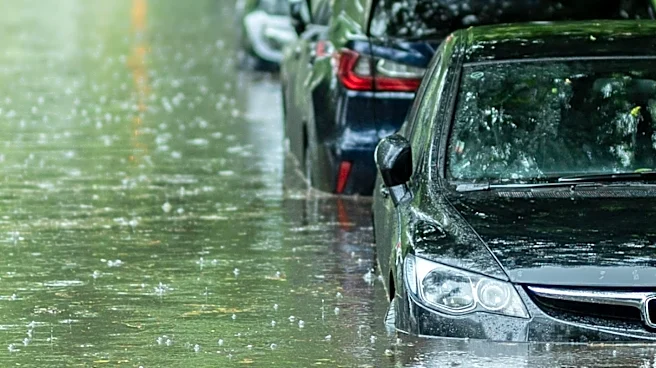
The Des Moines metropolitan area is currently experiencing significant flooding and numerous road closures as a result of ongoing heavy rainfall. Authorities are actively responding to reports of inundated roadways, with several major thoroughfares temporarily
shut down. Among the key closures are Dean Avenue between East 30th and East 34th streets, and multiple lanes at the intersection of Merle Hay Road and Douglas Avenue. Officials have issued warnings that more roads may become affected as the rain persists. Residents are advised to exercise extreme caution, avoid driving through flooded areas, and never bypass barricades or emergency vehicles. Additionally, the public is urged to keep children and pets away from floodwaters and to contact 911 in cases of distress involving individuals or animals.
Why It's Important?
The widespread flooding in the Des Moines metro area carries significant implications for daily life and local infrastructure. Road closures disrupt commuter routes, impacting travel times for residents and potentially affecting local businesses reliant on smooth transportation networks. The need for emergency services to respond to flood-related incidents can strain resources, diverting attention from other potential emergencies. Furthermore, the advisory to keep children and pets out of floodwater highlights public health and safety concerns, as floodwaters can carry contaminants and pose drowning risks. The economic impact could include damage to private property and public infrastructure, necessitating costly repairs and potentially leading to insurance claims. For the community, these events underscore the importance of preparedness for severe weather and adherence to safety guidelines issued by local authorities.
What's Next?
As heavy rains continue, officials anticipate that additional roads in the Des Moines metro area may be impacted, leading to further closures. Emergency services will remain on high alert, responding to new reports of flooding and assisting residents in distress. The focus will be on monitoring water levels and road conditions to determine when it is safe to reopen affected areas. Residents should continue to monitor local news and official advisories for real-time updates on road closures and safety recommendations. The long-term outlook will involve assessing the full extent of any damage to infrastructure and private property, which could lead to recovery efforts and discussions about future flood mitigation strategies.
Beyond the Headlines
Beyond the immediate disruptions, the recurring nature of heavy rainfall and subsequent flooding in urban areas like Des Moines points to broader challenges related to urban planning and climate resilience. The capacity of existing drainage systems to handle intense precipitation events is being tested, raising questions about the need for infrastructure upgrades. This situation also highlights the importance of public awareness campaigns regarding flood safety, particularly concerning the dangers of driving through floodwaters and the health risks associated with contact with contaminated water. The community's response to such events can also foster a sense of collective responsibility and mutual aid, as neighbors and local organizations often step in to support those affected. This event serves as a reminder of the continuous adaptation required for urban environments in the face of changing weather patterns.