









What's Happening?
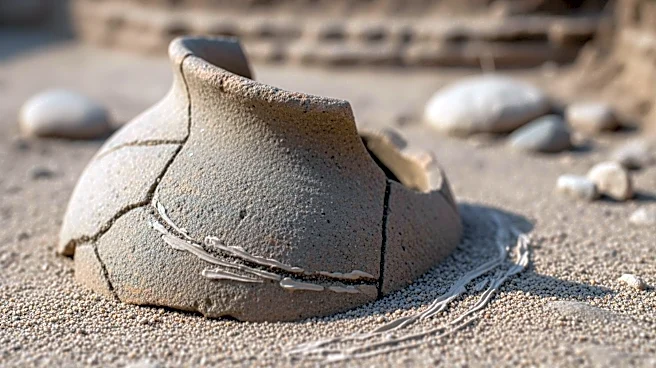
In the Nieuwe Drostendiep stream valley in Drenthe, Netherlands, archaeologists have unearthed more than 3,000 artifacts spanning several historical periods, including the Stone Age, Bronze Age, Middle Ages, the Eighty Years' War, and World War II. This
discovery was made during a redevelopment project aimed at creating space for nature and water. The artifacts, which include tools, jewelry, and objects from various eras, are noted for their remarkable condition and variety. The Drenthe province has highlighted the significance of these finds, with 600 items deemed 'very special.' The artifacts are currently being examined, cleaned, and cataloged, with plans for public display being considered.
Why It's Important?
The discovery of such a large and varied collection of artifacts is significant for both historical research and cultural heritage. It provides insights into the historical use of stream valleys as trade routes and spiritual sites, offering a glimpse into the lives of past civilizations. The preservation of these artifacts in good condition allows for detailed study and understanding of historical periods. This find also underscores the importance of archaeological research in redevelopment projects, ensuring that cultural heritage is preserved and appreciated. The potential public exhibition of these artifacts could enhance cultural tourism and education in the region.
What's Next?
The province of Drenthe, along with the municipality of Coevorden, is working with experts to determine the best way to display the artifacts to the public. Options include a physical exhibition and possibly a digital collection. More information on the exhibition plans is expected to be released after the summer. This initiative could lead to increased public interest and engagement with the region's rich historical heritage, potentially boosting local tourism and educational opportunities.
Beyond the Headlines
The discovery highlights the ethical considerations in archaeology, particularly in the context of redevelopment projects. It raises questions about the balance between development and preservation of cultural heritage. The involvement of local authorities and experts in the process reflects a commitment to ethical practices in archaeology. Additionally, the find may prompt further archaeological investigations in similar regions, potentially uncovering more historical artifacts and contributing to a broader understanding of human history.