



What's Happening?
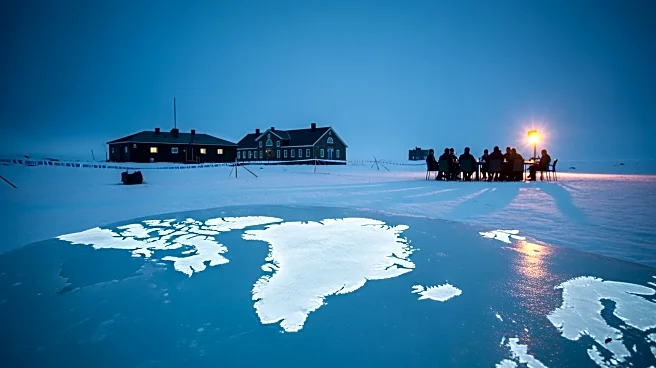
Several European countries, including Germany and France, have dispatched soldiers to Greenland as part of a reconnaissance mission, signaling support for Denmark amid tensions with the U.S. over Greenland's future. President Trump has expressed a desire
to acquire Greenland, citing national security concerns due to Russian and Chinese interests in the region. Despite the European military presence, the White House, through press secretary Karoline Leavitt, stated that this would not affect Trump's intentions. Denmark's Defense Minister Troels Lund Poulsen emphasized a more permanent military presence in Greenland, rejecting any U.S. acquisition as it infringes on sovereignty. Talks between the U.S., Denmark, and Greenland have not resolved the conflict over U.S. ownership claims.
Why It's Important?
The situation underscores the strategic importance of Greenland in Arctic geopolitics, with the U.S. viewing it as crucial for national security. The presence of European troops highlights international support for Denmark and Greenland's autonomy, potentially complicating U.S. ambitions. This development could strain U.S.-European relations and impact NATO dynamics, as Denmark and its allies seek to prevent a U.S. takeover. The ongoing dialogue reflects deep-seated geopolitical interests and the complexities of Arctic sovereignty, with potential implications for international law and regional stability.
What's Next?
Further talks are expected between the U.S., Denmark, and Greenland to address the ownership dispute. European nations may continue to bolster their military presence in Greenland as a deterrent against U.S. acquisition efforts. The situation may prompt broader discussions within NATO about Arctic security and sovereignty. The U.S. may need to navigate diplomatic channels carefully to avoid escalating tensions with European allies while pursuing its strategic interests in the Arctic.