





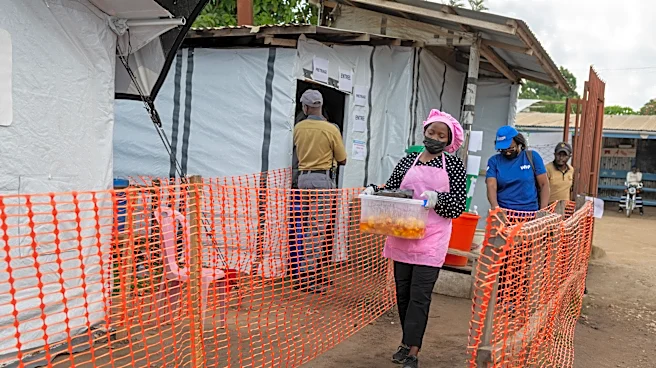
What's Happening?
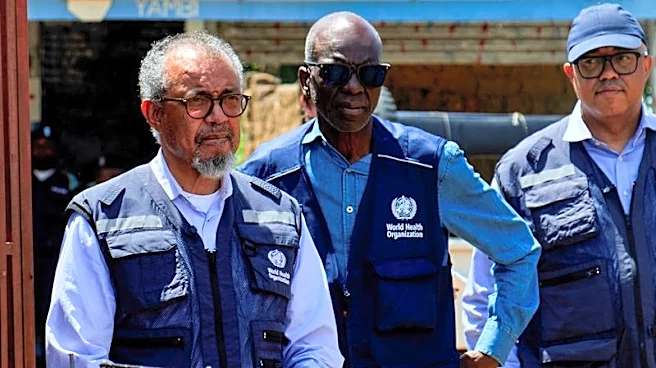
The World Health Organization (WHO) has reported that the Ebola outbreak in the Democratic Republic of the Congo may have started as early as January. Dr. Tedros Adhanom Ghebreyesus, the head of WHO, highlighted that the virus had a significant head start,
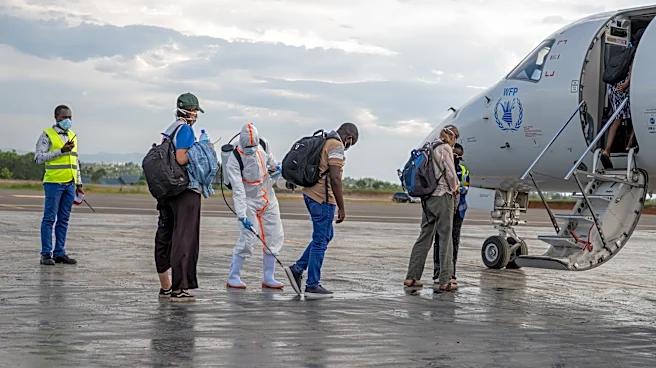
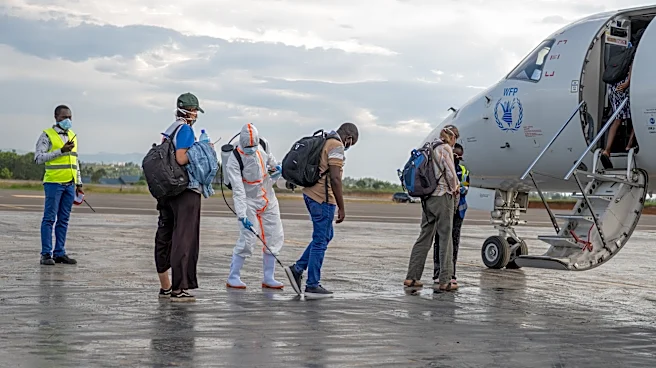
complicating containment efforts. The outbreak has resulted in 344 confirmed cases and 60 deaths in the DRC, with additional cases in Uganda. Key challenges include high levels of community mistrust and low contact tracing rates, exacerbated by travel restrictions. WHO is urging countries to lift these restrictions to improve response efforts. The organization is also working to enhance laboratory and diagnostic capacities in affected areas.
Why It's Important?
The early start of the Ebola outbreak and the challenges in containment have significant implications for public health in the region and globally. The spread of the virus across borders highlights the need for international cooperation and effective communication strategies to manage infectious diseases. The mistrust among communities and the logistical hurdles posed by travel restrictions could hinder efforts to control the outbreak, potentially leading to further spread. This situation underscores the importance of building trust and ensuring rapid response capabilities in global health emergencies.
What's Next?
WHO is focusing on increasing contact tracing efforts and improving diagnostic capabilities in the affected regions. The organization is also advocating for the lifting of travel restrictions to facilitate the movement of supplies and personnel. Continued international support and collaboration will be crucial in addressing the outbreak and preventing further spread. The response will likely involve scaling up healthcare infrastructure and community engagement to overcome mistrust and improve outbreak management.