




What's Happening?
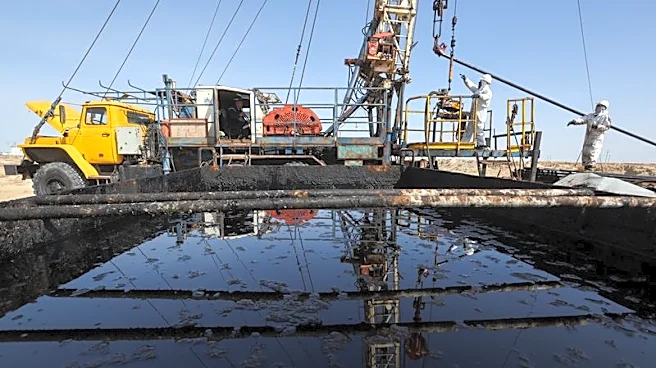
Gulf oil producers are actively pursuing alternative routes to bypass the Strait of Hormuz, a critical chokepoint for global oil trade, due to ongoing geopolitical tensions. The renewed conflict in Iran has led to a surge in oil prices, with Brent crude
reaching $100 a barrel. In response, several pipeline projects are underway or being planned to redirect oil supplies through the Red Sea, the Suez Canal, and the Gulf of Oman. Notably, Saudi Arabia and the UAE are expanding their existing pipelines to increase capacity. Iraq is also involved, with Prime Minister Ali al-Zaidi securing agreements with American firms to rebuild a pipeline from Kirkuk to Syria's Mediterranean port of Baniyas, aiming to establish a significant energy corridor.
Why It's Important?
The development of alternative oil routes is crucial for maintaining global energy security and stabilizing oil prices. The Strait of Hormuz is a vital passage for about a fifth of the world's traded oil, and its closure or disruption can have significant economic repercussions. By diversifying export routes, Gulf countries aim to mitigate risks associated with geopolitical conflicts and ensure a steady supply of oil to international markets. This strategic shift could reduce the Strait of Hormuz's influence on global oil prices and lessen the impact of regional conflicts on energy markets.
What's Next?
As these pipeline projects progress, the global oil market may experience shifts in trade patterns and pricing dynamics. The completion of these routes could lead to a more stable supply chain, reducing the volatility caused by geopolitical tensions in the Middle East. Additionally, the involvement of major international companies like Chevron and ExxonMobil in these projects highlights the potential for increased foreign investment in the region's energy infrastructure. However, the projects also face challenges, such as potential delays and security threats from regional conflicts.
Beyond the Headlines
The push for alternative routes underscores the broader geopolitical dynamics in the Middle East, where energy resources are a central element of power and influence. The involvement of international companies and governments in these projects reflects the interconnected nature of global energy markets and the strategic importance of the region. Furthermore, the development of these routes may influence future diplomatic relations and alliances, as countries seek to secure their energy needs while navigating complex regional politics.