




What's Happening?
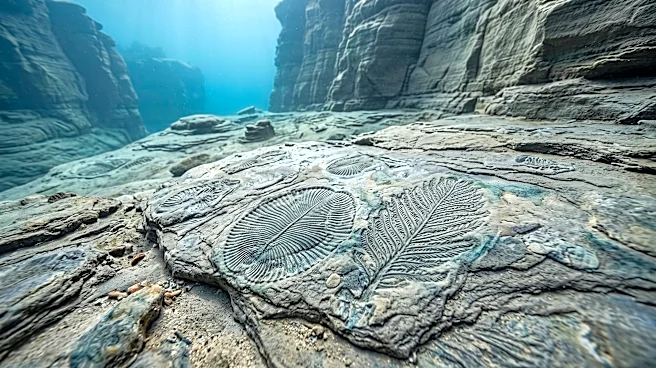
Research conducted in South Australia's Flinders Ranges has revealed that ancient underwater canyons played a crucial role in preserving soft-bodied Ediacaran organisms that existed before the Cambrian Explosion. Geologists, led by Karol Faehnrich of Adelaide
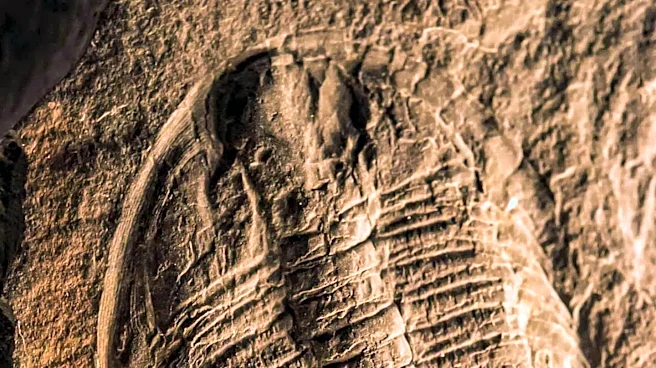
University, traced a buried landscape featuring canyons up to 280 meters deep and over six kilometers wide. Their findings, published in Earth and Planetary Science Letters, indicate that falling sea levels initially caused erosion, carving these canyons into the ancient continental shelf. Subsequently, rising sea levels led to the canyons being filled with sediment. This geological process created conditions ideal for the preservation of delicate, soft-bodied organisms, which typically decay without leaving fossil evidence. The study provides a detailed reconstruction of the seafloor changes that occurred more than half a billion years ago, offering insights into how such a rich fossil record of early complex life was formed in the region.
Why It's Important?
This discovery is significant for understanding the conditions necessary for the preservation of early complex life forms, particularly those without hard shells or bones. The Flinders Ranges offer one of the most comprehensive views of the Ediacaran period, a critical time before the rapid diversification of animal life during the Cambrian Explosion. By linking specific geological events—like canyon formation and subsequent sedimentation—to exceptional fossil preservation, scientists can better interpret fossil records globally. This research helps paleontologists differentiate between variations in ancient communities and differences in preservation quality across various fossil sites. Understanding these geological mechanisms can inform future fossil discoveries and provide a more accurate picture of Earth's early ecosystems and the evolutionary pathways that led to modern biodiversity.
What's Next?
Geologists can utilize the mapped boundary of these ancient canyons to compare fossil-bearing beds across the Flinders Ranges, determining which deposits formed within canyon fills and which accumulated later. This comparative analysis could reveal whether the best-preserved fossils are concentrated in specific parts of this geological sequence. Furthermore, the Australian reconstruction provides a valuable case study for comparison with Ediacaran fossil sites on other continents. Researchers will investigate if similar environmental changes preceded exceptional preservation elsewhere, which could explain why certain regions have particularly rich fossil records. This ongoing research aims to deepen the understanding of the geological history underlying fossil formations and its influence on the observable record of early life.
Beyond the Headlines
The study's implications extend beyond geology and paleontology, touching upon the broader understanding of life's origins and evolution. The exceptional preservation of Ediacaran organisms in the Flinders Ranges highlights the serendipitous interplay of geological processes and biological existence. It underscores that the fossil record is not merely a direct snapshot of ancient life but a filtered view, heavily influenced by environmental conditions. This research encourages a more holistic approach to paleontological studies, integrating detailed geological reconstructions with biological analyses to understand the true diversity and distribution of ancient life. It also serves as a reminder of the dynamic nature of Earth's surface and its profound impact on the long-term survival of biological evidence, shaping our current knowledge of evolutionary history.