
What's Happening?
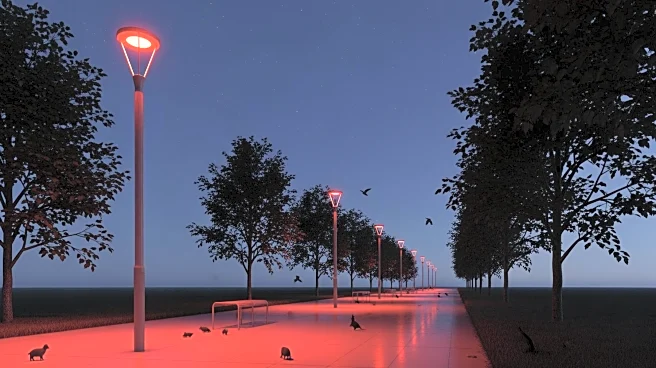
In Gladsaxe, a municipality near Copenhagen, Denmark, a new street lighting project has been implemented to reduce the environmental impact of artificial lighting. The project involves the installation
of red-spectrum LED street lighting along a 700-meter stretch of Frederiksborgvej and the Farum cycle superhighway. This initiative aims to balance the need for visibility for cyclists and pedestrians with the goal of minimizing disturbance to local wildlife, particularly bats. The red lighting is part of the EU's Lighting Metropolis program, which uses Copenhagen as a 'living lab' to explore how lighting can enhance safety, accessibility, and environmental sustainability. The project has been recognized for its innovative approach to reducing light pollution while maintaining safety standards.
Why It's Important?
The Gladsaxe lighting project is significant as it addresses the growing concern over the ecological impact of artificial lighting in urban areas. Traditional street lighting, which often uses bright white light, can disrupt the behavior of nocturnal wildlife. By opting for red-spectrum lighting, the project aims to limit this disruption, aligning with municipal biodiversity goals and the United Nations Sustainable Development Goals. This approach provides a potential model for other cities worldwide seeking to balance urban safety with environmental conservation. The project demonstrates how urban infrastructure can be adapted to meet both human and ecological needs, potentially influencing future urban planning and lighting strategies.
What's Next?
The Light Bureau, the design company behind the project, plans to continue collaborating with biologists to evaluate the ecological outcomes of the red-spectrum lighting. This ongoing assessment will inform future deployments and adjustments, potentially leading to broader adoption of similar lighting solutions in other cities. The project is being viewed as a template for addressing light pollution and its effects on wildlife, showcasing how urban areas can integrate environmental considerations into infrastructure development.