






What's Happening?
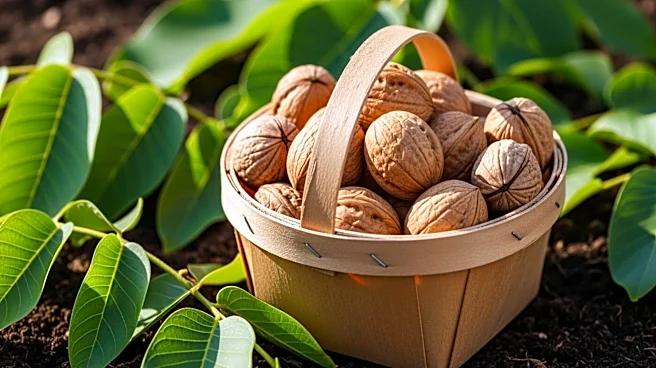
Farmers in the eastern parts of Bajura district have shown a growing interest in soft-shell walnut farming. This shift comes after successful trials of soft-shell walnut saplings distributed by various organizations. The saplings have demonstrated promising
growth and production potential, leading farmers to view walnut farming as a reliable income source. The local terrain, traditionally home to hard-shell walnut varieties, has proven suitable for the cultivation of soft-shell walnuts, which are easier to crack and have a high market demand. The trees, which can live up to 200 years, begin producing fruit within five to six years and can yield between 100 to 200 kilograms of walnuts annually. The increasing global demand for walnuts has further encouraged farmers in Bajura to pursue commercial walnut farming.
Why It's Important?
The shift towards soft-shell walnut farming in Bajura district represents a significant economic opportunity for local farmers. With walnuts being highly nutritious and in demand globally, this agricultural development could provide a sustainable and long-term income source for the region. The ability to store walnuts for extended periods without spoilage adds to their economic viability. As farmers increasingly adopt this crop, it could lead to enhanced economic stability and growth in the region, potentially reducing poverty and improving living standards. The success of this initiative could also serve as a model for other regions with similar climatic conditions, promoting agricultural diversification and resilience.