





What's Happening?
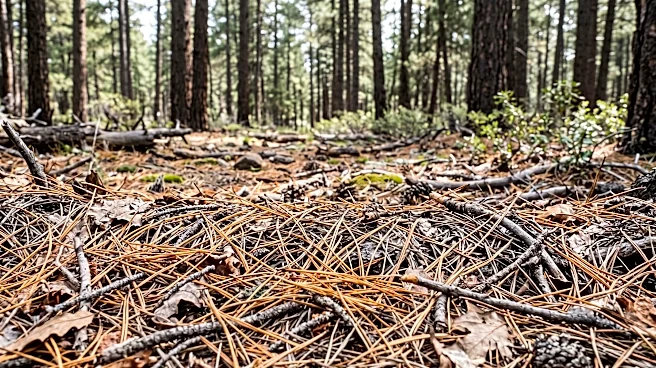
The Lincoln National Forest has announced plans to conduct prescribed burning operations across its Smokey Bear and Sacramento Ranger Districts, commencing as early as November 10, 2026. These controlled burns are strategically planned to reduce hazardous
fuel loads, improve overall forest health, and mitigate the risk of large, high-severity wildfires that could threaten nearby communities and natural resources. On the Smokey Bear Ranger District, the Baca Prescribed Burn Project will cover 24 acres north of Lincoln and west of Baca Campground, with ignitions potentially starting on November 10, 2026. In the Sacramento Ranger District, pile-burning operations are scheduled from November 11 through November 21, 2026, encompassing three distinct areas: 24 acres at Black Bear Campground Piles, 11 acres at Upper Karr Campground Piles, and 11 acres at Wofford Piles. These operations are contingent upon favorable weather and fuel moisture conditions, with Forest Service officials closely monitoring environmental factors to ensure safety and effectiveness. No public closures are currently associated with these activities, though visitors are advised to remain vigilant in the vicinity of the burn areas.
Why It's Important?
These prescribed burns are a critical component of proactive forest management strategies aimed at protecting both ecological systems and human communities. By reducing the accumulation of dead vegetation and undergrowth, the Forest Service can significantly lower the intensity and spread potential of future wildfires, which have become increasingly destructive in recent years. This proactive approach helps prevent catastrophic blazes that can devastate ecosystems, destroy property, and endanger lives. Furthermore, prescribed fires play a vital role in maintaining the natural fire cycles that many forest ecosystems depend on for regeneration and biodiversity. The controlled introduction of fire helps clear out competing vegetation, allowing native species to thrive and promoting healthier, more resilient forests. The operations also serve to protect critical infrastructure and natural resources within the forest, ensuring their long-term viability and the continued provision of ecosystem services. For local communities, these burns offer a layer of protection against the direct impacts of wildfires, such as smoke, evacuations, and property loss, while also preserving the recreational and economic benefits derived from a healthy forest.
What's Next?
The Lincoln National Forest will continue to monitor weather and fuel conditions daily, with prescribed burn operations proceeding only when all parameters align for safe and effective execution. If conditions are not favorable, planned activities will be postponed or canceled, and the public will be notified through official Forest Service channels. Residents in areas such as Capitan, Lincoln, Cloudcroft, Penasco Canyon, Pierce Canyon, and Silver Springs, NM, may experience visible smoke during the burn periods. The Forest Service is coordinating with air quality specialists to manage smoke impacts and advises the public to check the AirNow Fire and Smoke Map for current air quality information. Motorists traveling through smoky areas are urged to reduce speed, turn on headlights, and use hazard lights for increased visibility. Firefighters will remain on-site during ignitions and conduct patrols afterward, so these fires should not be reported as wildfires. The Forest Service will provide ongoing updates on its website and social media platforms regarding the prescribed fire schedule and any changes.
Beyond the Headlines
The implementation of prescribed burns in the Lincoln National Forest highlights a broader shift in land management philosophy towards embracing fire as a tool for ecological health rather than solely suppressing it. This approach acknowledges the historical role of fire in shaping forest landscapes and aims to restore natural processes that have been disrupted by decades of fire exclusion. The long-term implications include the creation of more fire-adapted ecosystems that are less susceptible to extreme wildfire events, thereby reducing the ecological and economic costs associated with large-scale conflagrations. Ethically, this strategy represents a commitment to stewardship that balances human safety with ecological integrity, recognizing that proactive, controlled interventions can prevent greater harm. Legally, these operations are conducted under strict guidelines and environmental assessments to ensure compliance with air quality standards and safety protocols. Culturally, these efforts can foster a deeper understanding and appreciation among the public for the complex dynamics of forest ecosystems and the necessity of active management to maintain their health and resilience in the face of climate change and other environmental pressures.