
What's Happening?
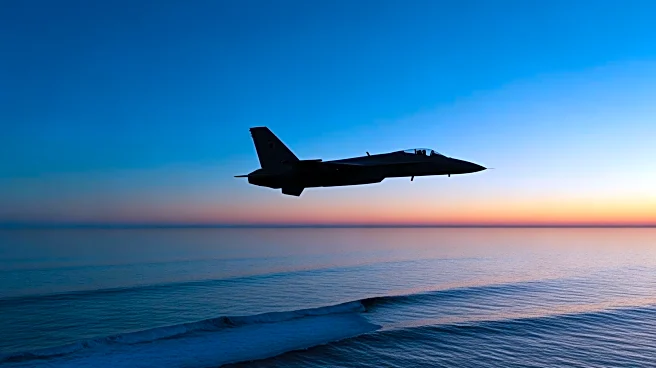
The U.S. military flew two F/A-18 fighter jets over the Gulf of Venezuela on Tuesday, marking a significant move in the region. This flight is the closest American warplanes have come to Venezuelan airspace
since the Trump administration's pressure campaign began. The jets conducted a 'routine training flight' and remained in international airspace, according to a U.S. defense official. This action is part of a broader U.S. military presence in the region, which has included strikes on alleged drug-smuggling boats. Venezuelan President Nicolás Maduro claims these operations aim to remove him from power. The Trump administration faces scrutiny from lawmakers over these military actions, with demands for unedited video evidence of the strikes.
Why It's Important?
This development underscores the ongoing geopolitical tensions between the U.S. and Venezuela. The U.S. military's actions in the region are part of a strategy to combat drug trafficking, but they also reflect broader political objectives, including pressure on the Maduro regime. The flights and military presence could escalate tensions, affecting diplomatic relations and regional stability. The scrutiny from U.S. lawmakers highlights concerns about transparency and accountability in military operations, which could influence future policy decisions and military engagements in the region.
What's Next?
The U.S. military's actions are likely to continue drawing attention from both domestic and international observers. Lawmakers may push for more oversight and transparency regarding military operations in the region. The situation could lead to further diplomatic exchanges between the U.S. and Venezuela, as well as other countries in the region. The Trump administration's future actions will be closely watched, particularly any land attacks President Trump has hinted at. The outcome of these developments could impact U.S. foreign policy and military strategy in Latin America.