





What's Happening?
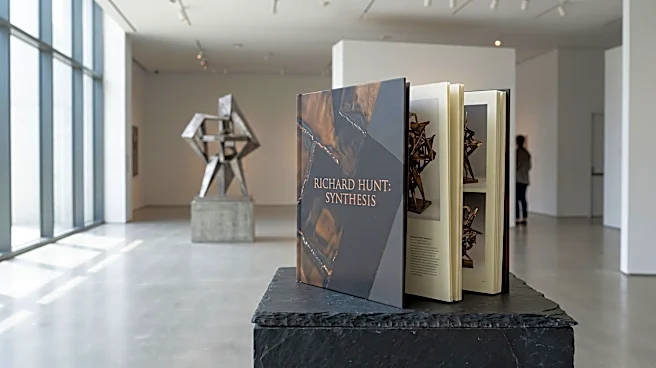
The Georgia Museum of Art has published a second, expanded edition of 'Richard Hunt: Synthesis,' a book dedicated to the prominent sculptor Richard Hunt, who passed away in 2023. The initial edition, released in 2018 alongside a retrospective exhibition,
quickly sold out. This new edition aims to provide additional insights into Hunt's seven-decade career, which was deeply influenced by his daily life, significant events, and personal encounters. Hunt's artistic journey began in his childhood on the South Side of Chicago, where his mother, Etoria, fostered his interest in music and art. He further developed his skills at the Art Institute of Chicago, eventually creating his own studio in his father's barbershop basement due to a lack of proper welding materials at the institute. It was there that he produced 'Hero’s Head,' a notable piece created after attending the 1955 open-casket funeral of Emmett Till, who lived near Hunt's childhood home. The expanded publication includes new images and essays, with contributions from Jon Ott of the Richard Hunt Legacy Foundation, who explores Hunt's connections to the American South, and Nijah Cunningham of Hunter College, who discusses Hunt's printmaking. The book also features a first-hand account of Hunt's life through an interview conducted by Shawnya L. Harris, the museum's Larry D. and Brenda A. Thompson Curator of African American and African Diasporic Art.
Why It's Important?
The release of an expanded second edition of 'Richard Hunt: Synthesis' is significant for several reasons. It underscores the enduring legacy and increasing recognition of Richard Hunt, a pivotal figure in American sculpture whose work spanned seven decades. The rapid sell-out of the first edition highlights a strong public and academic interest in his contributions to art. By expanding the publication with new images, essays, and a personal interview, the Georgia Museum of Art is enriching the scholarly and public understanding of Hunt's artistic process, inspirations, and impact. His connection to historical events, such as the murder of Emmett Till, demonstrates how his art was deeply intertwined with the social and political landscape of his time, offering a unique perspective on American history through the lens of a Black artist. This expanded edition ensures that Hunt's work, which often utilized found materials and drew from his lived experiences, remains accessible and continues to inspire future generations of artists and art enthusiasts. It also reinforces the role of museums in preserving and disseminating the narratives of influential artists, particularly those whose work reflects significant cultural and historical moments.
What's Next?
The expanded second edition of 'Richard Hunt: Synthesis' is now available, offering a more comprehensive look into the sculptor's life and work. The inclusion of new essays and an interview with Hunt himself will likely lead to renewed discussions and analyses of his artistic contributions and their historical context. This publication could serve as a valuable resource for art historians, students, and the general public interested in American sculpture and African American art. It may also prompt further exhibitions or academic studies focusing on specific aspects of Hunt's career, such as his printmaking or his engagement with social and political themes. The continued availability of such a detailed resource ensures that Richard Hunt's legacy as a prominent sculptor, whose art was deeply rooted in his experiences and the events around him, will be sustained and further explored in the art world and beyond. The book's success could also encourage other institutions to revisit and expand publications on underrepresented or highly influential artists.
Beyond the Headlines
Beyond its immediate impact as an art publication, the expanded 'Richard Hunt: Synthesis' delves into deeper cultural and historical implications. Hunt's creation of 'Hero’s Head' after attending Emmett Till's funeral highlights the profound connection between art and social justice, demonstrating how artists can process and respond to traumatic historical events. This act underscores the role of art as a form of witness and commentary, transforming personal grief and collective outrage into enduring cultural artifacts. The book's focus on Hunt's journey, from his early artistic development in Chicago to his extensive career, also sheds light on the challenges and triumphs of Black artists in America. It implicitly addresses themes of access to resources, self-reliance in creating one's own artistic space, and the persistent influence of one's environment on creative output. The re-release and expansion of this work contribute to a broader re-evaluation and celebration of artists whose contributions have shaped American culture, ensuring that their narratives are fully integrated into the national artistic canon and understood within their complex historical contexts.