





What's Happening?
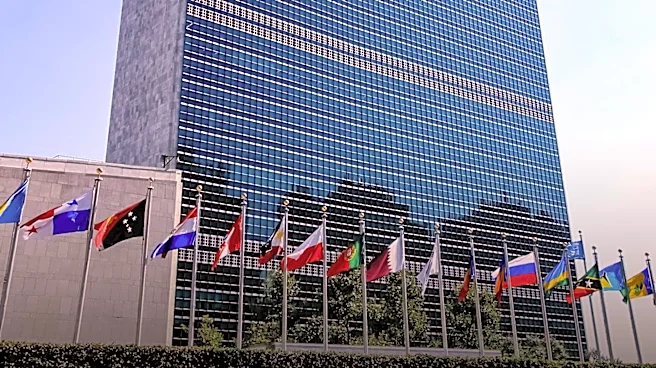
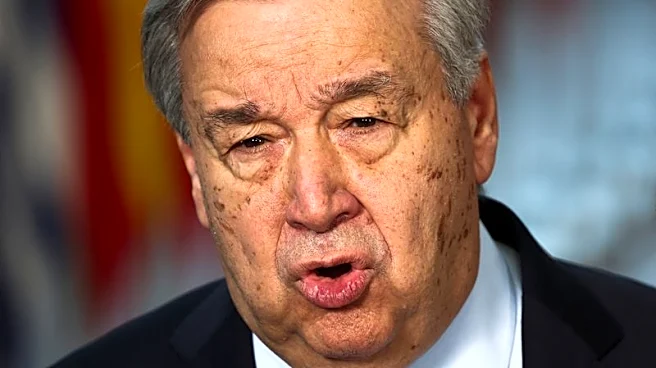
United Nations Secretary-General Antonio Guterres has issued a stark warning regarding the paralysis of the UN Security Council, attributing it to significant geopolitical divisions among major powers. Guterres emphasized that these divisions hinder the Council's
ability to act on global crises and address violations of international law. He specifically highlighted that some powers violating international law are also members of the Security Council, contributing to its ineffectiveness. Consequently, Guterres asserted that a reform of the Security Council is an "absolute priority." He argued that the current distribution of power within the Council no longer reflects contemporary global realities, necessitating a redistribution of influence to ensure its relevance and efficacy in maintaining international peace and security. Guterres also touched upon the ongoing conflict in Ukraine, stressing the urgent need for a ceasefire and conditions for a just peace, and the devastating consequences for the global economy.
Why It's Important?
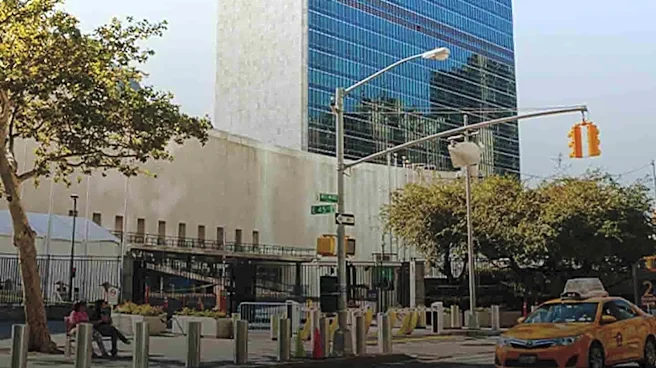
The call for Security Council reform by the UN Secretary-General underscores a critical challenge to global governance and international cooperation. The Security Council's inability to effectively address major conflicts and humanitarian crises due to veto power and geopolitical stalemates has profound implications for global stability. For the U.S., this situation means that multilateral approaches to pressing issues, such as regional conflicts, terrorism, and climate change, are often hampered, potentially forcing the U.S. to rely more on unilateral actions or ad-hoc coalitions. The paralysis also erodes the credibility and legitimacy of international institutions, which could lead to a more fragmented and less predictable global order. The U.S., as a permanent member of the Security Council, plays a pivotal role in any reform efforts, and the outcome could significantly alter its diplomatic influence and strategic alliances. The ongoing geopolitical tensions, including those in the Middle East and Ukraine, exacerbate these challenges, making effective international responses more difficult.
What's Next?
The call for Security Council reform is likely to spark renewed debates among UN member states, particularly regarding the expansion of permanent and non-permanent seats, and the use of the veto power. However, achieving consensus on such reforms is historically challenging due to the entrenched interests of current permanent members. Guterres's emphasis on the need for a redistribution of power suggests that future discussions will focus on making the Council more representative of the 21st-century world. While immediate changes are unlikely, the Secretary-General's statement puts pressure on member states to seriously consider the long-term implications of an ineffective Security Council. The U.S. will need to navigate these discussions carefully, balancing its national interests with the broader goal of strengthening international institutions. The ongoing global crises, from conflicts to climate change, will continue to highlight the urgency of finding solutions to the Council's inaction.
Beyond the Headlines
Beyond the immediate political implications, the paralysis of the UN Security Council raises fundamental questions about the future of international law and the principle of collective security. When major powers can violate international law with impunity and block collective action, it undermines the very foundations of the post-World War II international order. This situation could lead to a dangerous precedent where states increasingly disregard international norms, potentially escalating conflicts and humanitarian crises. The ethical dimension of this inaction is significant, as millions of people suffer from conflicts that the Security Council is unable to resolve. Culturally, it could foster a growing cynicism towards international institutions and multilateralism, leading to a more nationalistic and isolationist global landscape. The long-term shift could be towards a multipolar world where power is exercised through regional blocs or bilateral agreements, rather than through a unified global framework, with profound consequences for global peace and human rights.