



What's Happening?
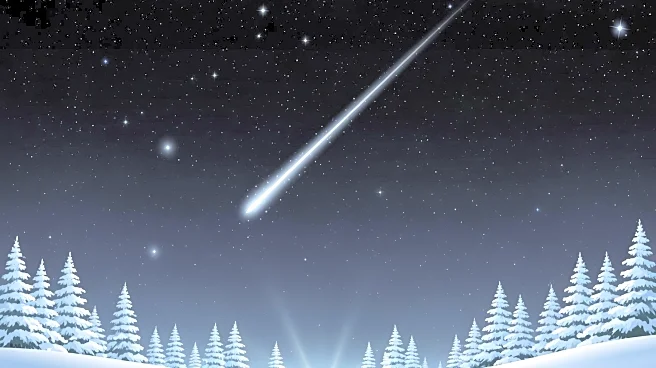
The Ursid meteor shower, the final celestial event of the year, is set to peak between Sunday night and early Monday morning. Sky-gazers in the Northern Hemisphere can expect to see five to ten meteors per hour during this period. The event coincides
with the winter solstice, marking the longest night of the year, and a thin crescent moon, which will create ideal dark skies for meteor viewing. The Ursids originate from the Ursa Minor constellation and occur as Earth passes through debris left by comet 8P/Tuttle. This year, enhanced activity is expected due to Earth passing through a particular trail of debris. Observers are advised to find a dark location away from city lights and to face the northern half of the sky for the best viewing experience.
Why It's Important?
The Ursid meteor shower provides a unique opportunity for sky enthusiasts and the general public to engage with astronomy. Such celestial events foster interest in space science and can inspire educational activities and discussions about the universe. The timing of the shower, coinciding with the winter solstice, adds to its significance, as it marks a transition in the seasonal calendar. Additionally, the event highlights the ongoing interaction between Earth and cosmic debris, offering insights into the dynamics of our solar system. For communities and individuals, it presents a chance to connect with nature and the cosmos, promoting a broader appreciation for the natural world.