
What's Happening?
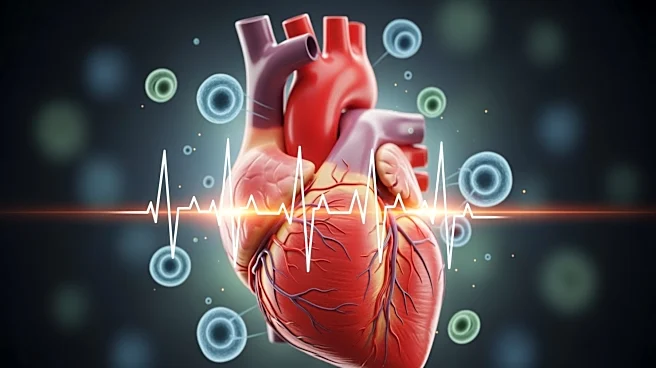
Researchers at the International Centre for Genetic Engineering and Biotechnology (ICGEB) have discovered that the heart's constant beating may actively suppress tumor growth in cardiac tissues. The study,
led by Giulio Ciucci, PhD, and Serena Zacchigna, MD, PhD, involved experiments on mouse models and engineered heart tissues. The findings suggest that mechanical forces in the heart alter gene regulation in cancer cells, preventing their proliferation. The research highlights the role of mechanical load in inhibiting cancer cell growth, potentially explaining the low incidence of cardiac tumors. The study utilized a genetically engineered mouse model to demonstrate the heart's resistance to cancer-causing mutations, even when potent oncogenic changes were introduced. By creating a 'mechanically unloaded' heart through transplantation, researchers observed increased tumor cell proliferation, contrasting with the suppression seen in mechanically active hearts.
Why It's Important?
This research provides significant insights into the biological mechanisms that protect the heart from cancer, which could lead to innovative cancer therapies. Understanding how mechanical forces influence cancer cell proliferation could pave the way for new treatments that exploit these forces to inhibit tumor growth. The study's findings suggest that mechanical stimulation might be used as a therapeutic approach to prevent or treat cancer, particularly in tissues subjected to constant mechanical stress like the heart. This could have broad implications for developing non-invasive cancer treatments that leverage the body's natural mechanical environments to suppress tumor growth.
What's Next?
Future research may focus on exploring the potential of mechanical therapy for cancer treatment, building on the insights gained from this study. Researchers might investigate how mechanical forces can be harnessed or enhanced in other tissues to prevent cancer proliferation. Additionally, further studies could explore the role of proteins like Nesprin-2 in mediating these mechanical effects, potentially leading to targeted therapies that mimic or enhance these natural protective mechanisms.
Beyond the Headlines
The study opens up new avenues for understanding the interplay between mechanical forces and cancer biology. It challenges traditional views of cancer treatment by suggesting that physical forces, rather than just chemical or biological interventions, can play a crucial role in controlling tumor growth. This could lead to a paradigm shift in how cancer therapies are developed, emphasizing the importance of the physical microenvironment in cancer progression and treatment.