
What's Happening?
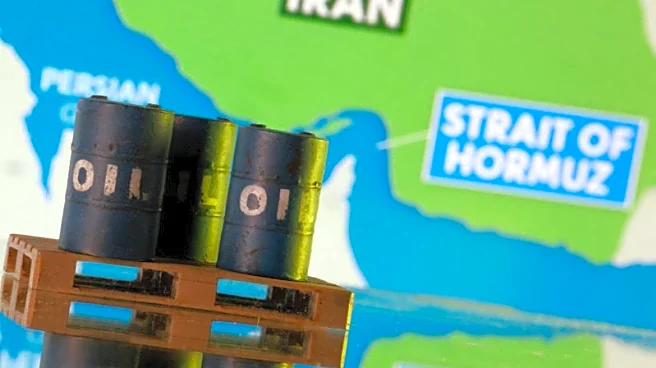
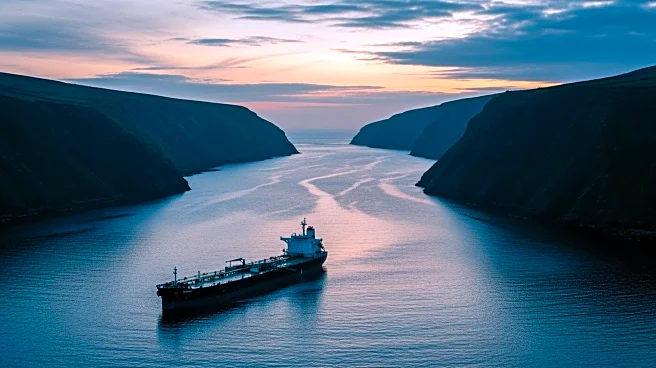
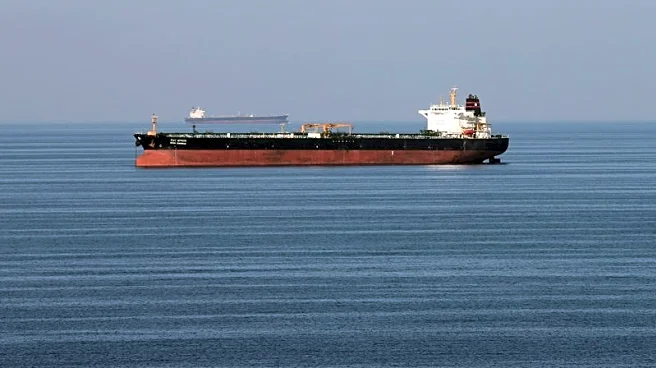
The ongoing conflict involving Iran has severely disrupted global shipping, particularly in the Middle East Gulf, where insurance companies are canceling war risk coverage for vessels. The Strait of Hormuz, a critical maritime chokepoint, has seen a near
halt in shipping activities after vessels were attacked as Iran retaliated against U.S. and Israeli strikes. This disruption has resulted in damaged tankers, stranded ships, and at least two fatalities. The conflict has caused oil and European natural gas prices to surge, with Brent crude futures rising by up to 13%. Approximately 150 vessels, including oil and liquefied natural gas tankers, are currently stranded, leading to potential cargo pile-ups at ports in Europe and Asia. Iran has threatened to fire on any ship attempting to navigate the strait, further escalating tensions.
Why It's Important?
The disruption in the Strait of Hormuz, through which a significant portion of the world's oil and gas supply is transported, has far-reaching implications for global energy markets. The halt in shipping activities could lead to increased oil prices and supply chain disruptions, affecting economies worldwide. The cancellation of war risk insurance by major marine insurers adds to the financial burden on shipping companies, potentially leading to higher shipping costs and insurance premiums. This situation underscores the geopolitical risks associated with the region and highlights the vulnerability of global trade routes to political conflicts. The conflict's impact on energy prices could also influence economic policies and energy strategies in affected countries.
What's Next?
As the conflict continues, shipping companies will need to seek alternative insurance coverage at higher rates to maintain operations in the region. The potential for prolonged disruptions in the Strait of Hormuz could lead to further increases in oil and gas prices, prompting governments and businesses to reassess their energy strategies and stockpiles. The situation may also lead to increased diplomatic efforts to de-escalate tensions and ensure the security of critical maritime routes. The global shipping industry will need to adapt to these challenges, potentially exploring alternative routes or increasing security measures to protect vessels and crew.