








What's Happening?
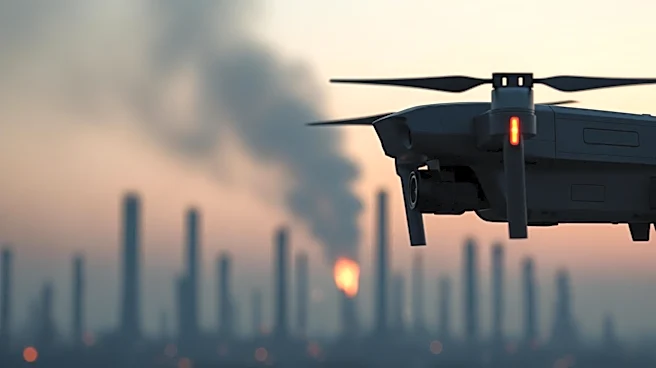
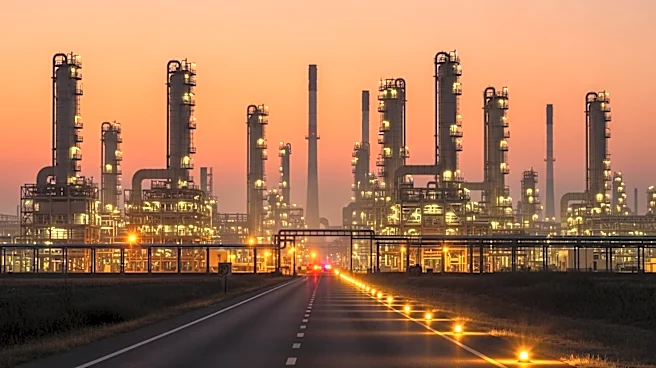
Authorities in Tuapse, a southern port town in Russia, have ordered evacuations following a Ukrainian drone attack on a Rosneft oil refinery. This marks the third attack on the facility this month, resulting in a large-scale fire. Over 300 emergency personnel
have been deployed to manage the situation, and temporary shelters have been set up for displaced residents. The refinery, which processes approximately 12 million metric tons of crude annually, is a significant export route for naphtha, fuel oil, and diesel. The attack is part of a broader Ukrainian strategy to target Russian oil infrastructure, aiming to cut off energy revenues to the Kremlin. The incident occurs amid rising global oil prices and ongoing geopolitical tensions.
Why It's Important?
The repeated attacks on Russian oil infrastructure by Ukraine highlight the escalating conflict's impact on global energy markets. With oil prices already high due to geopolitical tensions, such disruptions could further strain supply chains and increase prices. The strategic targeting of energy facilities by Ukraine aims to weaken Russia's economic position by reducing its energy export revenues. This tactic could have significant implications for global energy security and economic stability, affecting countries dependent on Russian oil exports. Additionally, the attacks underscore the increasing use of drone technology in modern warfare, raising concerns about the security of critical infrastructure worldwide.
What's Next?
The ongoing conflict and targeted attacks on energy infrastructure are likely to prompt further international diplomatic efforts to de-escalate tensions. Countries reliant on Russian oil may seek alternative energy sources to mitigate supply disruptions. The situation could also lead to increased investments in energy security and infrastructure protection. As the conflict continues, both Russia and Ukraine may intensify their military strategies, potentially leading to further escalations. The international community will likely monitor the situation closely, with potential implications for global energy policies and economic sanctions.