





What's Happening?
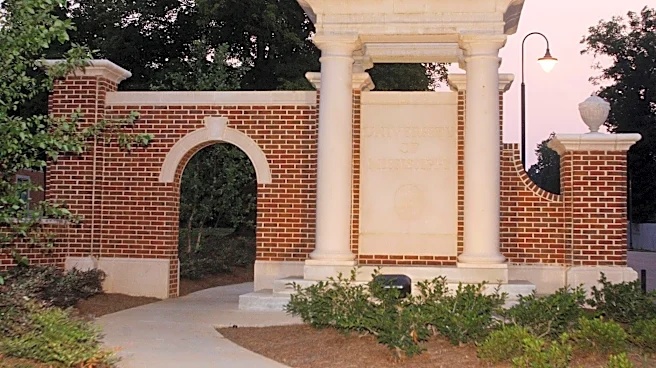
The University of Mississippi Medical Center (UMMC) has launched Mississippi’s inaugural physical medicine and rehabilitation (PM&R) residency program. This new program, accredited by the Accreditation Council for Graduate Medical Education on July 1,
completes UMMC's core residency offerings. Previously, medical students in Mississippi interested in PM&R had to seek residency training outside the state. Dr. Jennifer Hankenson, program director and associate professor of neurosurgery, noted that the program will provide comprehensive training in rehabilitation medicine, including a strong foundation in internal medicine. The initiative, which began in 2018 but was delayed by the COVID-19 pandemic, aims to address the state's persistent physician shortage and improve patient care.
Why It's Important?
This new residency program is crucial for Mississippi, a state facing a significant physician shortage and high rates of conditions requiring rehabilitation, such as stroke. By establishing an in-state training pathway for PM&R physicians, UMMC aims to retain more medical graduates within Mississippi, thereby enhancing access to specialized care for its residents. The state has one of the highest stroke mortality rates in the U.S., and PM&R physicians are vital in helping patients recover function and independence after such events, as well as from traumatic brain injuries, amputations, and age-related conditions. The program's success could lead to improved health outcomes and a stronger healthcare infrastructure across Mississippi.
What's Next?
The PM&R residency program is approved for 16 residents, with plans to initially welcome two or three residents per year, gradually increasing to its full capacity. Residents will receive training across various specialties, including neurology, orthopedic surgery, and rheumatology, with Methodist Rehabilitation serving as a primary training site. The long-term goal is for graduates to remain in Mississippi, contributing to the local healthcare system and serving the community. This initiative is expected to foster a new generation of PM&R physicians who are deeply familiar with the state's specific healthcare needs, potentially leading to more localized and effective rehabilitation services.
Beyond the Headlines
The establishment of this residency program reflects a broader national trend of states and medical institutions addressing physician shortages and specialized care gaps through localized training initiatives. It highlights the importance of graduate medical education in shaping regional healthcare landscapes and the potential for such programs to act as anchors for physician retention. Beyond the immediate medical benefits, this program could also stimulate economic growth in the healthcare sector, attract more medical professionals to the state, and foster research and innovation in rehabilitation medicine. It underscores the critical role of academic medical centers in not only treating patients but also in building the future healthcare workforce.