





What's Happening?
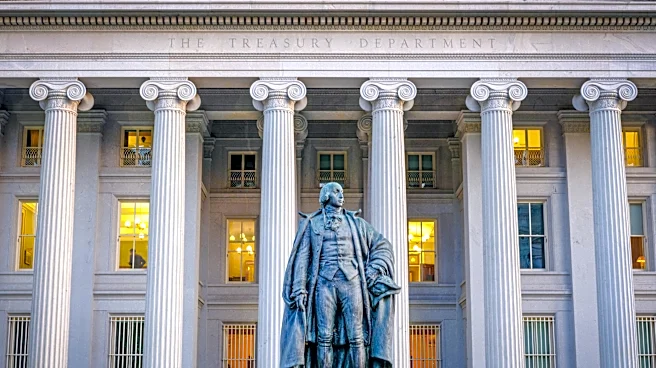
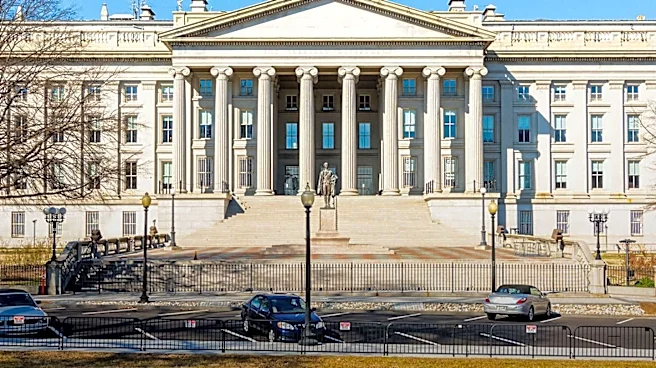
The United States Department of the Treasury has imposed sanctions on eight money services businesses operating in Canada. These firms are accused of acting as financial conduits for Iran, its Islamic Revolutionary Guard Corps (IRGC), and international
drug trafficking networks. The enforcement action, dubbed 'Operation Economic Outcast,' was launched in August to dismantle foreign financial mechanisms and cryptocurrency channels allegedly used by Tehran to bypass international sanctions. Treasury Secretary Scott Bessent stated that Canada cannot be a safe haven for illicit financial facilitators supporting the Iranian regime. The Office of Foreign Assets Control (OFAC) claims these Canadian firms exchanged Iranian rials and conventional currencies for cryptocurrencies to facilitate cross-border transactions involving sanctioned Iranian entities. Investigations allege that multiple targeted firms transacted with state-aligned Iranian digital asset exchanges, including Nobitex, Wallex, Bitpin, and Shelbit, as well as digital wallets directly tied to the IRGC. The Treasury's effort was coordinated with the Financial Crimes Enforcement Network (FinCEN), the U.S. Drug Enforcement Administration (DEA), and Canada’s national financial intelligence agency, the Financial Transactions and Reports Analysis Centre of Canada (FINTRAC). Additionally, federal authorities noted that several of these businesses laundered proceeds for Ryan Wedding, a Canadian narcotics trafficker arrested in January 2026, who allegedly funneled drug money through these exchanges to convert funds into digital currencies for overseas accounts.
Why It's Important?
These sanctions are important because they underscore the U.S. government's commitment to disrupting financial networks that enable illicit activities and support sanctioned entities, particularly those linked to state-sponsored terrorism and weapons proliferation. By targeting Canadian firms, the U.S. is demonstrating its willingness to extend its enforcement reach beyond its borders, impacting international financial systems. This action aims to cut off critical funding sources for the IRGC, which the U.S. designates as a terrorist organization, thereby hindering Iran's ability to fund its regional activities and potentially its nuclear program. The involvement of cryptocurrency in these alleged schemes highlights the growing challenge of regulating digital assets and preventing their misuse for illicit finance. The coordination with Canadian authorities also emphasizes the importance of international cooperation in combating financial crimes and enforcing sanctions. For U.S. businesses and financial institutions, these sanctions mean increased vigilance is required when dealing with Canadian entities, as engaging with the designated firms could lead to secondary sanctions. This move also sends a strong message to other countries that facilitate such financial flows, urging them to strengthen their own anti-money laundering and sanctions enforcement mechanisms.
What's Next?
Under these sanctions, all U.S.-based property and financial assets connected to the designated Canadian entities are blocked, and American persons and institutions are prohibited from engaging in commercial or financial transactions with them. Foreign institutions that continue to transact with these designated firms risk exposure to secondary sanctions, which could significantly impact their access to the U.S. financial system. This will likely lead to increased scrutiny of financial transactions between the U.S. and Canada, particularly those involving currency exchanges and digital assets. The U.S. Treasury will continue to monitor global financial networks for similar circumvention schemes, potentially leading to further sanctions against other entities or countries. The ongoing 'Operation Economic Outcast' suggests a sustained effort to dismantle such illicit financial mechanisms. Businesses, especially those involved in international trade and finance, will need to enhance their due diligence processes to ensure compliance and avoid inadvertently facilitating sanctioned activities. The Canadian government may also face pressure to further tighten its regulations and enforcement against financial entities operating within its borders to prevent them from being used as conduits for illicit finance.
Beyond the Headlines
The sanctions against these Canadian firms reveal a broader trend in U.S. foreign policy and financial enforcement: the increasing focus on disrupting the financial infrastructure that supports adversarial states and criminal organizations, regardless of geographical location. The use of cryptocurrency in these alleged schemes highlights a significant challenge for global financial regulators. While digital assets offer efficiency, their decentralized nature can also be exploited for illicit purposes, making them harder to track and regulate. This situation raises ethical and legal questions about the extent of extraterritorial jurisdiction in sanctions enforcement and the balance between national sovereignty and international financial security. The U.S. approach, leveraging its economic power to enforce its sanctions globally, can create diplomatic tensions but is seen by Washington as a necessary tool to counter threats. This development could also accelerate the adoption of more robust international standards for cryptocurrency regulation and cross-border financial transparency, as nations seek to prevent their financial systems from being implicated in illicit activities.