


What's Happening?
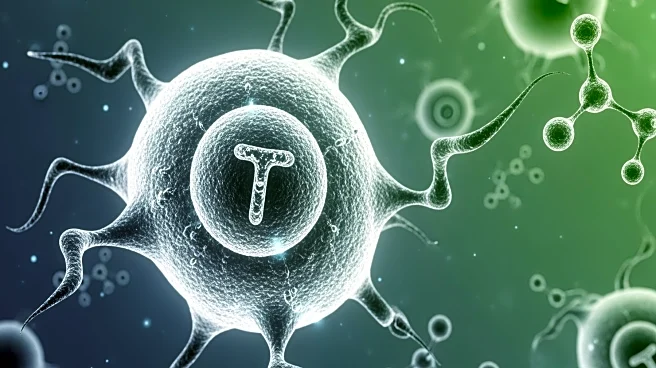
Scientists at Cold Spring Harbor Laboratory (CSHL) have discovered a novel application of CAR T-cell therapy to promote intestinal repair, particularly in aging individuals. The intestinal epithelium, a crucial layer for digestion, often suffers damage
with age or due to cancer treatments, leading to conditions like leaky gut syndrome. The research, led by Assistant Professor Corina Amor Vegas, focuses on using anti-uPAR CAR T cells to remove senescent cells that accumulate with age and hinder cellular regeneration. In experiments with mice, the therapy significantly improved nutrient absorption, reduced inflammation, and enhanced the regeneration of the intestinal lining. This approach also showed promise in protecting against radiation-induced gut damage, a common issue for cancer patients undergoing radiation therapy. The therapy's effects were sustained for at least a year, indicating its potential for long-term benefits.
Why It's Important?
This development is significant as it offers a potential new treatment for age-related intestinal issues, which affect a large portion of the aging population. By improving gut health, this therapy could enhance the quality of life for elderly individuals and those undergoing cancer treatments. The ability to regenerate the intestinal lining more effectively could reduce complications associated with leaky gut syndrome and improve overall digestive health. Furthermore, the research opens avenues for clinical trials that could lead to new therapeutic strategies for managing age-related decline in gut function. The findings also highlight the broader potential of CAR T-cell therapy beyond cancer treatment, suggesting its applicability in regenerative medicine.
What's Next?
The next steps involve further exploration of the biological mechanisms by which anti-uPAR CAR T cells promote intestinal healing. Researchers aim to conduct clinical trials to evaluate the therapy's efficacy and safety in humans. If successful, this could lead to the development of new treatments for age-related gut issues and potentially other age-related conditions. The research team is also interested in understanding how this therapy can be integrated into existing treatment protocols for cancer patients to mitigate the side effects of radiation therapy. Continued collaboration between researchers and clinical practitioners will be crucial in advancing this promising therapeutic approach.
Beyond the Headlines
The application of CAR T-cell therapy in gut health represents a shift in how regenerative medicine can be applied to non-cancerous conditions. This research underscores the importance of targeting senescent cells, which are increasingly recognized as contributors to various age-related diseases. The study also raises ethical considerations regarding the use of advanced immunotherapies in non-life-threatening conditions, balancing potential benefits against risks and costs. As the therapy progresses towards clinical application, regulatory frameworks will need to adapt to accommodate these novel uses of CAR T-cell technology.