


What's Happening?
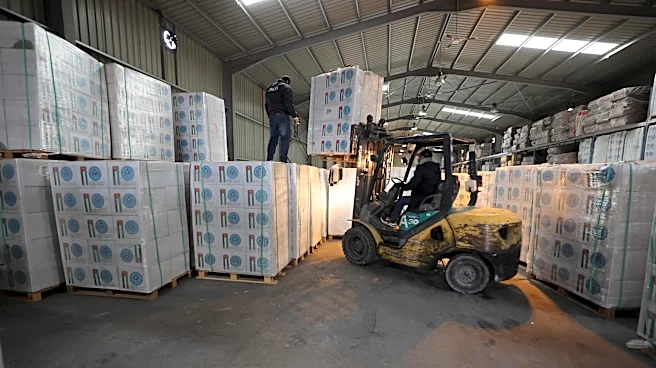
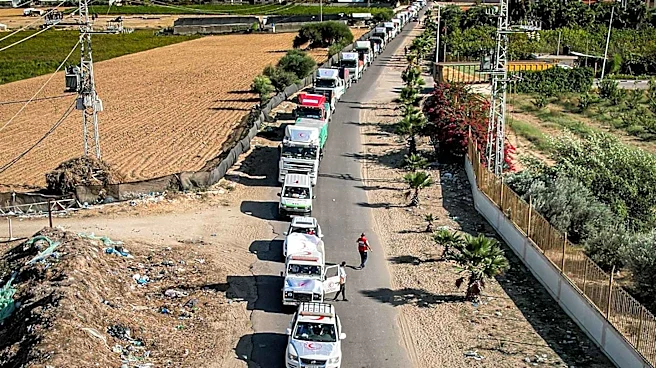
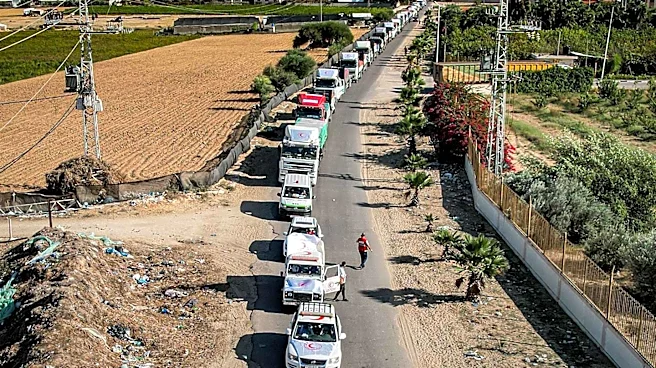
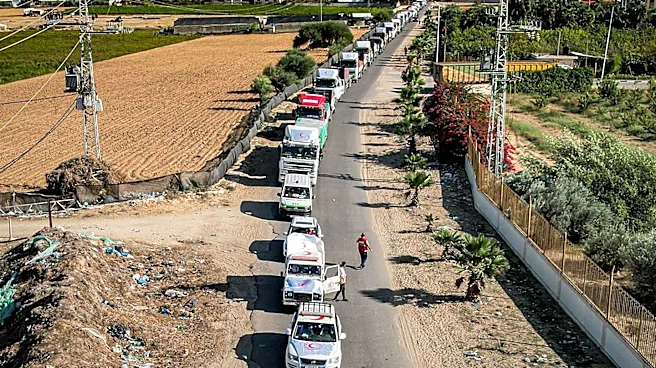
A humanitarian access advocacy group, spearheaded by Qatar, the United Kingdom, and Jordan, has called for unrestricted humanitarian access to Gaza during a United Nations briefing. The group, representing 53 countries and organizations, emphasized the urgent
need for the incoming Israeli government to expedite the delivery of aid and essential supplies into Gaza. They also advocated for the reinstatement of medical referrals to hospitals in East Jerusalem and the West Bank, enhanced protection for healthcare workers, and transparent investigations into attacks targeting humanitarian and healthcare personnel. The group underscored the critical role of the United Nations and impartial international humanitarian organizations in providing assistance to the population. This call comes as winter conditions exacerbate the humanitarian crisis, with many residents lacking adequate shelter and facing risks of hypothermia and waterborne diseases. Constraints on critical shelter items and other life-saving supplies continue to hinder humanitarian efforts.
Why It's Important?
The call for unhindered humanitarian access to Gaza is critically important due to the severe and deteriorating conditions faced by its population, particularly as winter sets in. The obstruction of aid, including essential shelter materials, fuel, and medical supplies, has led to a catastrophic humanitarian situation, with over 1.2 million people living in critical or catastrophic shelter conditions. This directly impacts public health, increasing the risk of respiratory infections, hypothermia, and waterborne diseases. The denial of these basic necessities, despite a ceasefire agreement that included provisions for humanitarian aid, raises serious concerns about adherence to international humanitarian law and the protection of civilian populations. The involvement of multiple nations and organizations, including key U.S. allies, highlights the international community's growing concern and the potential for diplomatic pressure on the incoming Israeli government. The situation also underscores the fragility of ceasefire agreements when humanitarian clauses lack independent verification mechanisms, potentially undermining future peace efforts.
What's Next?
The advocacy group's call places immediate pressure on the incoming Israeli government to address the humanitarian crisis in Gaza. The expectation is for Israel to allow and facilitate rapid and unimpeded humanitarian access through all available crossings and land routes. This includes approving additional critical items, particularly those related to shelter, fuel, water, sanitation, and health supplies, which are currently considered 'dual-use' and face restrictions. The group also expects the restoration of medical referral pathways to hospitals outside Gaza for those requiring specialized treatment. The international community, including the European Union and various Western and Arab states, will likely continue to monitor the situation closely and exert diplomatic pressure. The effectiveness of these calls will depend on the political will of the new Israeli government and the sustained advocacy of international bodies and nations. Without significant changes, the humanitarian situation is projected to worsen, especially with ongoing winter conditions.
Beyond the Headlines
The ongoing humanitarian crisis in Gaza, exacerbated by restrictions on aid, reveals deeper implications concerning international law, the ethics of conflict, and the effectiveness of humanitarian interventions. The classification of essential items like shelter materials and fuel as 'dual-use' highlights a contentious aspect of security rationales, where humanitarian needs can be inadvertently or intentionally leveraged in broader political contexts. This situation raises ethical questions about the responsibility of occupying powers under the Fourth Geneva Convention to ensure civilian survival and allow relief consignments. Furthermore, the lack of an independent verification mechanism for ceasefire humanitarian provisions exposes a structural weakness in international agreements, potentially setting a precedent where humanitarian commitments can be disregarded without immediate consequence. The broad international consensus on the need for aid, despite differing political stances, underscores a shared concern for human suffering, but also the challenges in translating this concern into effective action when geopolitical interests are at play. The long-term impact on the civilian population, particularly children, due to prolonged exposure to inadequate living conditions, will have lasting health and social consequences.