
What's Happening?
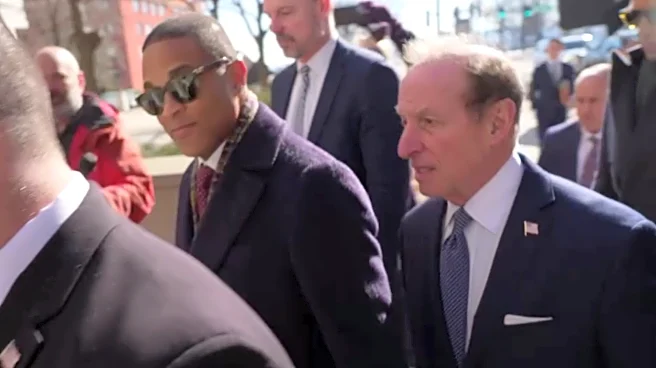
Former CNN anchor and independent journalist Don Lemon has pleaded not guilty to federal charges related to his involvement in a protest at a church in St. Paul, Minnesota. Lemon is facing two federal charges: conspiring to violate constitutional rights
and violating the Freedom of Access to Clinic Entrances (FACE) Act. The FACE Act prohibits the use of force or threats to intentionally interfere with someone exercising their First Amendment right to practice religion. Lemon's arrest last month has drawn significant attention, as he is a well-known media figure. The charges stem from an incident where Lemon allegedly participated in a protest that disrupted religious services, leading to his arrest and subsequent legal proceedings.
Why It's Important?
The case against Don Lemon highlights ongoing tensions between protest activities and legal boundaries concerning constitutional rights. The charges of conspiring to violate constitutional rights and the FACE Act are serious, reflecting the legal system's efforts to balance the right to protest with the protection of religious freedoms. This case could set a precedent for how similar incidents are handled in the future, particularly involving high-profile individuals. The outcome may influence public discourse on the limits of protest activities and the enforcement of laws designed to protect religious practices. Additionally, the case underscores the challenges faced by media personalities who engage in activism, as their actions are often scrutinized more intensely due to their public profiles.
What's Next?
As the legal proceedings continue, Don Lemon's case will likely attract further media attention and public interest. The court will need to determine whether Lemon's actions constituted a violation of the FACE Act and if there was a conspiracy to infringe on constitutional rights. The trial's outcome could have implications for how similar cases are prosecuted in the future, particularly those involving protests at religious sites. Legal experts and civil rights advocates may weigh in on the case, potentially influencing public opinion and policy discussions regarding the balance between protest rights and religious freedoms.