
What's Happening?
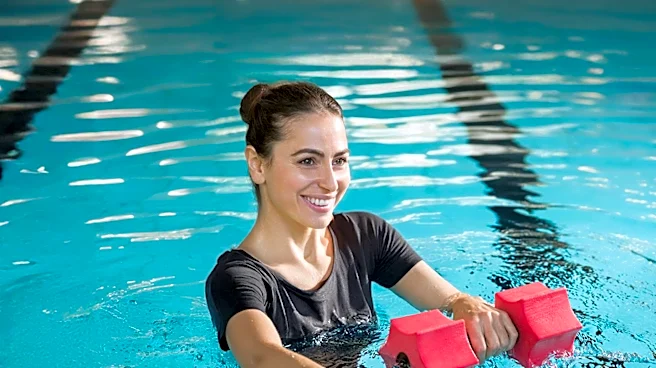
Community recreation centers across the U.S. are increasingly focusing on adaptive fitness and inclusive accessibility to better serve individuals with disabilities. This shift involves moving beyond specialty
offerings to integrate these services as core expectations. Organizations like the Bloomsburg Area YMCA in Pennsylvania and the Bender JCC of Greater Washington in Maryland are leading these efforts. The Bloomsburg Area YMCA's 'I Can Y' initiative includes Adaptive Recreation for children, offering traditional and non-traditional sports, obstacle courses, and sensory activities with an emphasis on participation and social connection. It also provides Adaptive Fitness for young adults with disabilities, helping them develop healthy exercise habits in a supportive environment. The Bender JCC of Greater Washington has implemented RightHear, a technology that uses a free smartphone app and camera-readable markers to provide audio information, enabling individuals who are blind or have low vision to navigate the facility independently. These initiatives aim to remove physical, sensory, and social barriers, fostering a sense of belonging for all community members.
Why It's Important?
The growing emphasis on adaptive fitness and inclusive accessibility in community recreation centers is crucial for promoting health equity and social inclusion within U.S. society. By removing barriers, these facilities are not only meeting the specific needs of individuals with disabilities but also building trust with families and attracting new participants. This approach strengthens the role of community centers as places where everyone belongs, regardless of their abilities. For individuals with disabilities, adaptive fitness programs offer tailored exercise opportunities that consider unique physical realities, such as hypermobility and low muscle tone, which are common in conditions like Down syndrome. This specialized support helps individuals engage in joyful, low-impact movement, build functional strength, and develop a positive relationship with physical activity. Furthermore, inclusive accessibility technologies, like RightHear, empower individuals with visual impairments to navigate public spaces independently, enhancing their autonomy and participation in community life. This trend signifies a broader societal recognition of the importance of universal design and inclusive practices in public services.
What's Next?
The trend of integrating adaptive fitness and inclusive accessibility is expected to expand, with more community recreation centers adopting similar programs and technologies. The Bloomsburg Area YMCA, for instance, is scaling its Adaptive Recreation program to two additional YMCAs in its region, providing program structure, training support, and resources. This indicates a move towards broader implementation and standardization of adaptive programs. Furthermore, the YMCA is collaborating with a national company to develop adaptive-appropriate, sensory-aware equipment, suggesting future innovations in accessible fitness gear. For facilities like the Bender JCC, the focus will be on building awareness and adoption of new technologies like RightHear, actively seeking feedback from users to continuously improve the experience. Industry leaders are encouraged to prioritize listening to individuals with disabilities, parents, and caregivers to understand their needs better. The goal is to treat accessibility as an ongoing commitment rather than a one-time project, ensuring that inclusion is a continuous process that evolves with community needs and technological advancements.
Beyond the Headlines
Beyond the immediate benefits of physical activity and accessibility, the movement towards adaptive fitness and inclusive recreation has deeper implications for societal attitudes and cultural norms. It challenges the traditional view of disability as a limitation, reframing it as a call for innovative and inclusive design. This shift fosters a culture of belonging, where individuals of all abilities are not just accommodated but are actively integrated into community life. Ethically, it underscores the principle that everyone deserves the opportunity to be active, try new things, and build relationships. Legally, it aligns with the spirit of disability rights legislation, pushing for environments that are truly accessible and equitable. Culturally, these initiatives help to destigmatize disability, promoting greater understanding and acceptance. The long-term impact could be a more inclusive society where public spaces and services are designed with universal access in mind from the outset, leading to greater participation, improved health outcomes, and enhanced quality of life for individuals with disabilities.