



What's Happening?
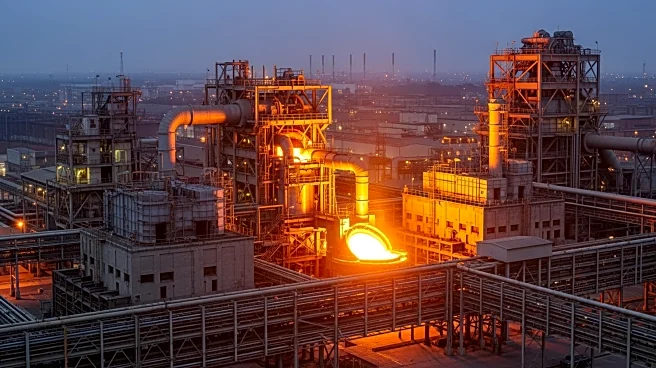
South32, an Australian diversified mining company, has confirmed that its Mozal aluminium smelter in Mozambique will be placed into care and maintenance starting March 2026. This decision follows the company's inability to secure a sufficient and affordable
electricity supply, which is crucial for the smelter's operations. The current power contract, which requires about 940 MW of continuous power, is set to end in March. Despite efforts to negotiate a new contract with South African utility Eskom, no agreement was reached, as the proposed terms were deemed unviable for the smelter. The drought has also affected Mozambique's hydropower generation capabilities, further complicating the situation. The wind-down is expected to impact approximately 4,000 direct jobs and 20,000 indirect jobs, representing a significant portion of Mozambique's GDP.
Why It's Important?
The closure of the Mozal smelter is a significant blow to Mozambique's economy, as it accounts for about 3.9% of the country's GDP. The loss of jobs will have a profound impact on the local workforce, with limited opportunities for re-employment in the vicinity. For Eskom, the inability to secure a new contract with South32 means finding alternative buyers for the power previously supplied to the smelter, potentially affecting its earnings. The situation underscores the challenges faced by industries reliant on stable and affordable energy supplies, highlighting the broader implications for energy policy and economic stability in the region.
What's Next?
South32 will incur care and maintenance costs of $5 million annually to maintain basic security around the Mozal smelter. The company is also preparing for redundancy and separation costs estimated at $60 million. The closure and rehabilitation process is expected to cost around $119 million, with discussions ongoing with the government regarding the timing. South32 has already impaired the majority of the asset value, effectively writing down the plant and equipment to zero. The company is exploring options to place its aluminium products elsewhere, as it navigates the transition away from the smelter.
Beyond the Headlines
The decision to wind down the Mozal smelter highlights the vulnerabilities of industrial operations dependent on external energy supplies. It raises questions about the sustainability of such operations in regions with fluctuating energy availability. The long-term implications for Mozambique's economic development and employment landscape are significant, as the country grapples with the loss of a major industrial player. The situation also reflects broader challenges in securing reliable energy contracts, which are crucial for maintaining industrial competitiveness and economic growth.