



What's Happening?
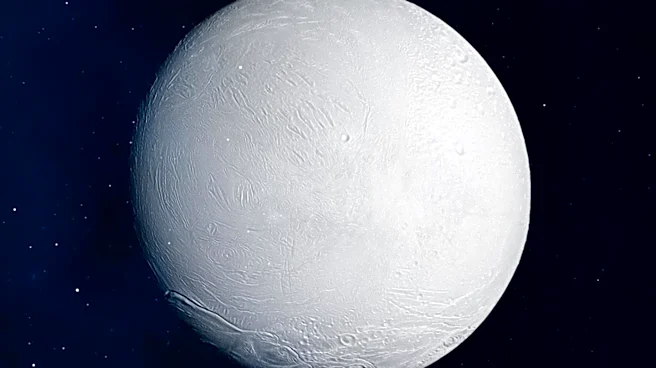
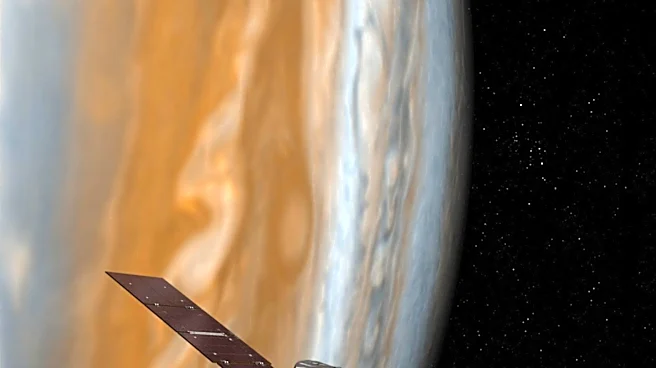
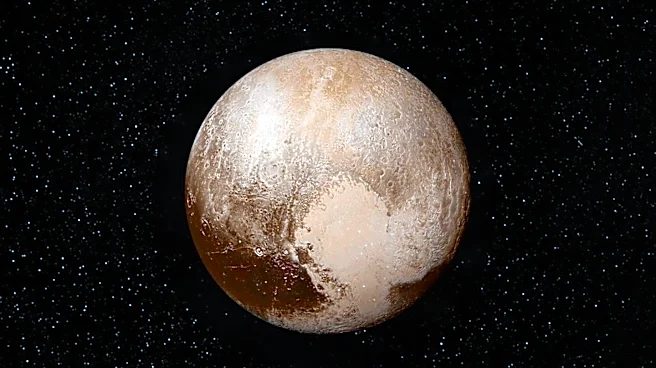
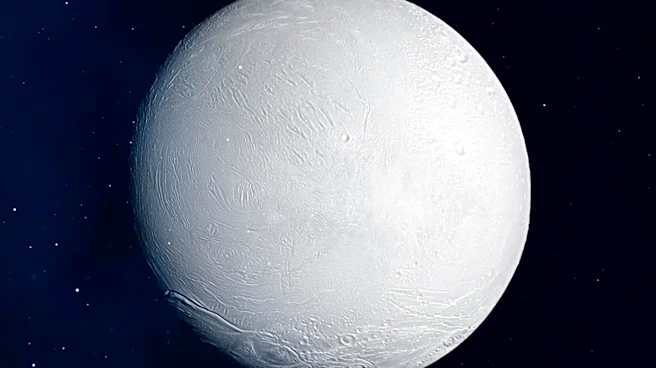
Research indicates that at least six moons in the solar system may contain oceans beneath their icy surfaces. Europa, Ganymede, Callisto, Enceladus, Titan, and Mimas are among the moons believed to have subsurface oceans. These oceans are inferred from
magnetic, gravitational, orbital, geological, and chemical evidence rather than direct observation. NASA defines 'ocean worlds' as bodies with substantial liquid reservoirs, which may contain salts or ammonia. The presence of these oceans is suggested by various methods, including induced magnetic signals and geological activity.
Why It's Important?
The discovery of subsurface oceans on moons has significant implications for understanding the potential for life beyond Earth. These oceans may provide environments where life could exist, protected from harsh surface conditions. The research also expands the understanding of planetary geology and the dynamics of celestial bodies. As new missions and improved models continue to reveal more about these moons, the possibility of finding life or understanding the conditions necessary for life increases, influencing future space exploration priorities.