



What's Happening?
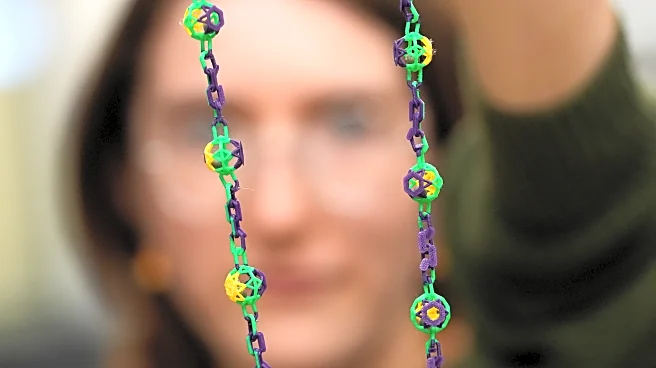
In an effort to address the environmental impact of traditional Mardi Gras celebrations, the Krewe of Freret in New Orleans has banned the use of plastic beads in their parade. Instead, they are using biodegradable beads developed at Louisiana State University.
These 'PlantMe Beads' are made from polylactic acid, a starch-based material, and contain okra seeds, allowing them to decompose naturally. This initiative is part of a broader movement towards a more sustainable Mardi Gras, which has seen the introduction of various eco-friendly throws. The Pontchartrain Conservancy highlights the environmental issues caused by plastic beads, such as clogging storm drains and polluting Lake Pontchartrain.
Why It's Important?
The shift towards biodegradable beads represents a significant step in reducing the environmental footprint of Mardi Gras, a festival that generates approximately 2.5 million pounds of trash annually. By replacing plastic beads with sustainable alternatives, the Krewe of Freret is setting a precedent for other krewes and encouraging a cultural shift towards valuing environmentally friendly practices. This change not only helps protect local ecosystems but also raises awareness about the impact of plastic waste. The initiative could inspire other communities to adopt similar practices, potentially leading to broader environmental benefits.
What's Next?
The success of the biodegradable beads will be evaluated based on feedback from parade participants and spectators. The Krewe of Freret and LSU researchers are exploring further innovations, such as using different materials for 3-D printing that biodegrade more quickly. Additionally, there are plans to involve local schools in the production of eco-friendly beads, integrating education on bioplastics and sustainability into the community. These efforts aim to foster a long-term cultural shift towards reducing waste and promoting environmental responsibility during Mardi Gras and beyond.