



What's Happening?
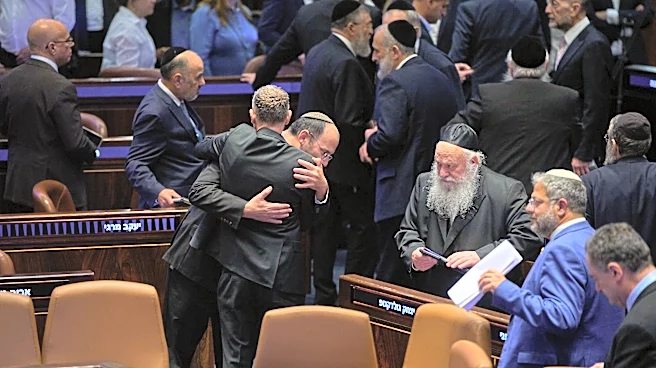
Dan Illouz, a departing lawmaker from Israel's Likud party, revealed that a significant faction within the party considered replacing Prime Minister Benjamin Netanyahu following the October 7, 2023, attack by Hamas. Illouz stated that at least one-third
of Likud's parliamentary members believed a leadership change was necessary, but internal disagreements on a successor prevented action. Illouz, who opposed legislation exempting ultra-Orthodox men from military service, announced his departure from Likud, citing a failure to uphold the party's values. The internal dissent highlights ongoing tensions within the party regarding military and economic policies.
Why It's Important?
The internal conflict within Likud reflects broader challenges facing Israeli politics, particularly concerning military service and coalition dynamics. The debate over leadership and policy direction could impact Israel's domestic and foreign policy, especially in terms of military readiness and economic stability. Illouz's departure and criticism of the party's alignment with ultra-Orthodox interests underscore potential shifts in voter support and party strategy. These developments may influence future elections and the composition of Israel's government, affecting its approach to security and economic issues.
What's Next?
As Israel approaches its next election, the Likud party may face increased scrutiny and pressure to address internal divisions. The potential for leadership changes and policy realignments could shape the party's electoral prospects and its ability to form a stable government. Illouz's decision to leave Likud and explore other political options may inspire similar moves by other members, further altering the political landscape. The ongoing debate over military service exemptions and coalition priorities will likely remain central issues in Israeli politics.