




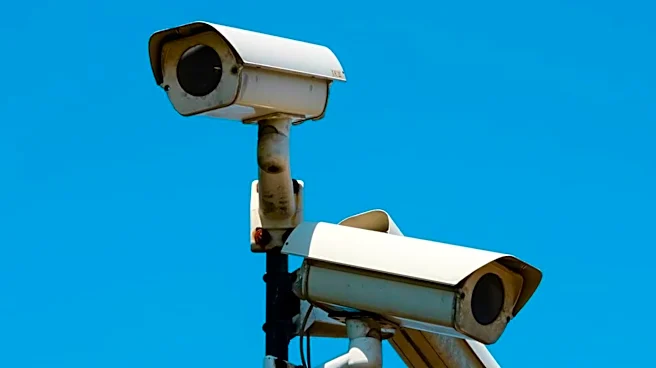
What's Happening?
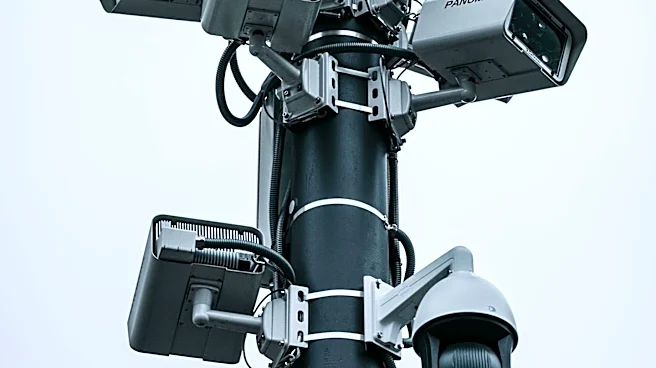
Jevon Martinez, a 44-year-old Rio Rancho resident, was arrested after filming himself removing Flock Safety camera equipment in Bernalillo County on September 2. Martinez loaded the equipment into his truck, explaining his actions online by stating he was 'helping
out' the Bernalillo County Sheriff's Office (BCSO) after Sheriff John Allen announced the termination of the department's contracts with Flock Safety due to privacy and data sharing concerns. However, authorities clarified that only two of the ten removed camera systems were associated with BCSO, while the other eight belonged to neighborhood associations. Martinez faces charges of larceny over $2,500 and interference with communications. This is not his first encounter with law enforcement regarding license plate readers, as he was previously arrested in Sandoval County for similar alleged actions.
Why It's Important?
This incident is important as it highlights the growing public debate and legal complexities surrounding automated license plate reader (ALPR) technology and privacy rights in the U.S. While Sheriff Allen expressed concerns about Flock Safety's practices, Martinez's actions of physically removing the cameras, regardless of his intent, constitute a criminal offense. This case underscores the tension between individual privacy advocacy and the legal boundaries of property rights and law enforcement. It also brings to light the varying ownership and management of ALPR systems, with both public agencies and private entities like neighborhood associations utilizing them. The legal proceedings will likely set precedents for how such disputes are handled, influencing future policy and public engagement regarding surveillance technologies.
What's Next?
Jevon Martinez appeared virtually in Bernalillo County Metropolitan Court on September 4. While prosecutors did not file a pretrial detention motion for the Bernalillo County case, Martinez remains in custody due to a separate Sandoval County case involving earlier alleged removals of license plate reader systems, where he faces nine felony charges and has been indicted by a grand jury for violating release conditions. The cases remain unresolved, and the charges are allegations until proven in court. The outcome of these legal proceedings will be closely watched, as they could influence how similar acts of protest against surveillance technology are handled in the future and may prompt further discussions on the legal framework governing ALPR deployment and public interaction with such systems.
Beyond the Headlines
Beyond the immediate legal ramifications, this case delves into the deeper societal implications of surveillance technology and the balance between public safety and individual privacy. The 'tyranny trees' moniker used by Martinez reflects a segment of the population deeply concerned about the pervasive nature of ALPRs and their potential for misuse, such as tracking movements or data breaches. This incident could fuel further public discourse on the ethical considerations of data collection by both government and private entities, potentially leading to calls for stricter regulations, greater transparency, and enhanced oversight of surveillance technologies. It also highlights the challenge for law enforcement agencies to build public trust while utilizing tools that some perceive as intrusive, necessitating a careful approach to technology adoption and community engagement.