











What's Happening?
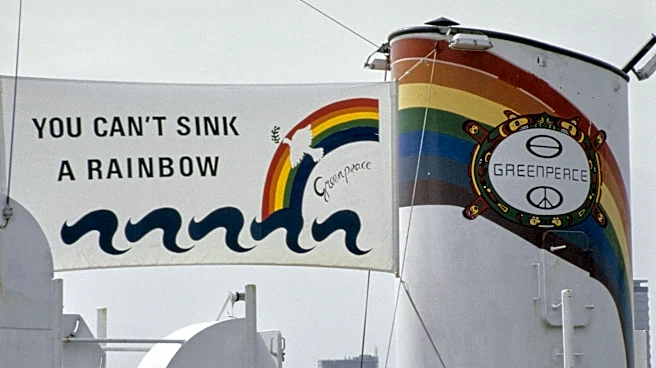
On June 30, Greenpeace activists reported an encounter with a Russian warship while photographing a sanctioned crude oil tanker, the Kira K, near the German coast. The tanker, laden with oil from Primorsk, Russia, was being escorted by the Russian corvette
Soobrazitelny. Greenpeace, with activists from several countries, was documenting the tanker's passage as part of their efforts to monitor the movement of shadow fleet tankers, which have been rerouting along the German coast. The Russian warship reportedly approached at high speed and communicated with the German Coast Guard, demanding that Greenpeace activists maintain their distance. Despite the tense interaction, the tanker continued its journey without incident, under the watch of the German vessel Bayreuth.
Why It's Important?
This incident highlights the ongoing tensions surrounding the enforcement of sanctions on Russian oil exports. Greenpeace's actions underscore the environmental and geopolitical concerns related to the shadow fleet's activities, which have increased in the region. The presence of Russian military vessels in these waters, and their interactions with environmental groups, reflect the broader strategic interests at play in the Baltic Sea. The situation also raises questions about the effectiveness of current sanctions and the need for stronger enforcement by European nations to prevent sanctioned goods from reaching international markets.
What's Next?
Greenpeace is calling for Baltic countries to enhance their control and enforcement of sanctions against the shadow fleet. This may lead to increased diplomatic discussions and potential policy adjustments within the EU to address the loopholes being exploited by these tankers. The incident could also prompt further scrutiny of maritime activities in the region, potentially leading to more robust monitoring and enforcement measures by European coast guards and naval forces.
Beyond the Headlines
The confrontation between Greenpeace and the Russian warship also highlights the complex interplay between environmental activism and international maritime law. The presence of military vessels in civilian maritime zones raises legal and ethical questions about the rights of non-governmental organizations to monitor and report on activities that may contravene international sanctions. This incident could set a precedent for future interactions between environmental groups and military forces, influencing how such encounters are managed and resolved.