








What's Happening?
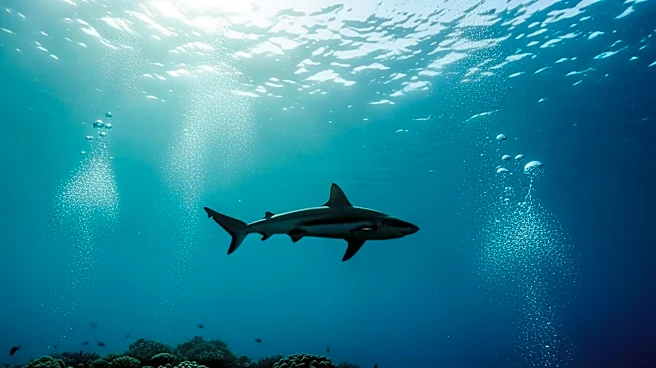
The International Shark Attack File at the Florida Museum of Natural History has released its 2025 report on shark-human interactions. The report investigated 105 alleged interactions worldwide, confirming 65 as unprovoked bites and 29 as provoked. Unprovoked
bites occur when a person is in a shark's natural habitat without initiating interaction, while provoked bites involve attempts to touch or handle sharks. The report highlights that the number of incidents has remained stable, with 65 unprovoked bites close to the recent five-year average of 61. However, fatalities increased slightly, with 12 shark-related deaths recorded, nine of which were unprovoked. The United States recorded the highest number of unprovoked bites, with 25 confirmed cases and one fatality. The report emphasizes the importance of conservation efforts and public education to balance ocean safety with the critical ecological role sharks play.
Why It's Important?
The report underscores the need for effective conservation measures and public education to mitigate shark-human interactions while preserving marine ecosystems. Sharks are vital to maintaining healthy marine food webs, and their conservation is crucial as 30% of the 1200 shark species are endangered. The findings suggest that local increases in encounters may reflect changing environmental conditions or human behavior rather than increased shark aggression. The report calls for investment in monitoring programs and nonlethal risk-reduction tools to ensure coexistence between humans and sharks. Understanding these interactions is essential for developing strategies that protect both human safety and shark populations.
What's Next?
The report suggests that encounter rates with sharks may increase due to conservation successes and environmental changes. Governments are encouraged to invest in monitoring programs and public education to reduce risks. The International Shark Attack File provides guidelines to decrease the chances of shark bites, such as swimming with others and avoiding dawn and dusk swimming. The focus is on adapting human behavior to coexist with recovering wildlife populations, ensuring that conservation efforts continue to support both human safety and shark preservation.