





What's Happening?
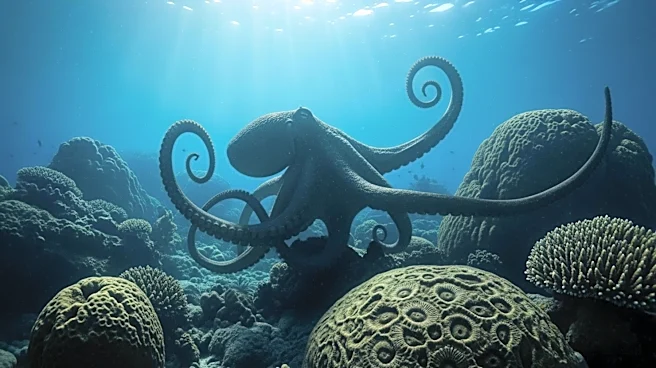
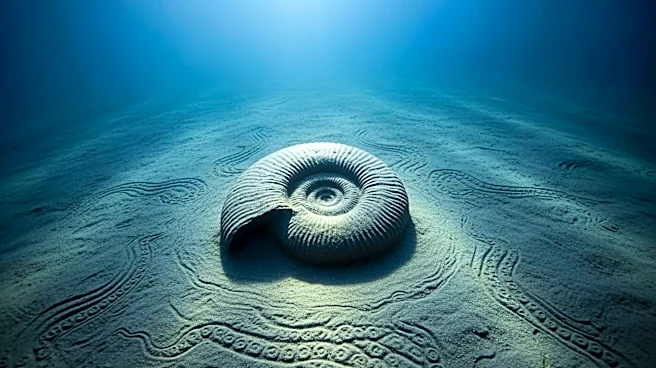
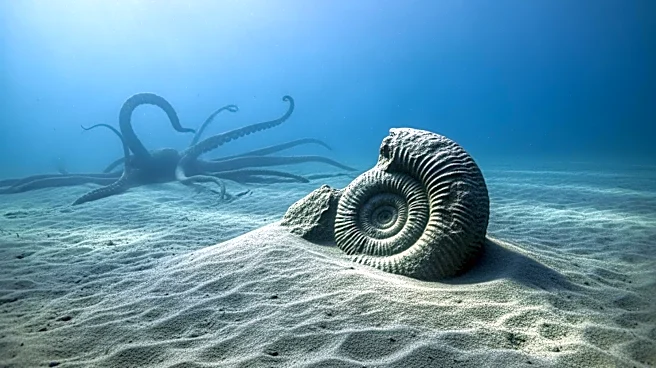
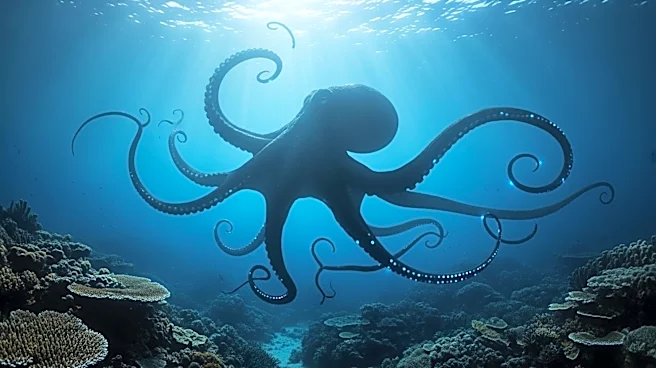
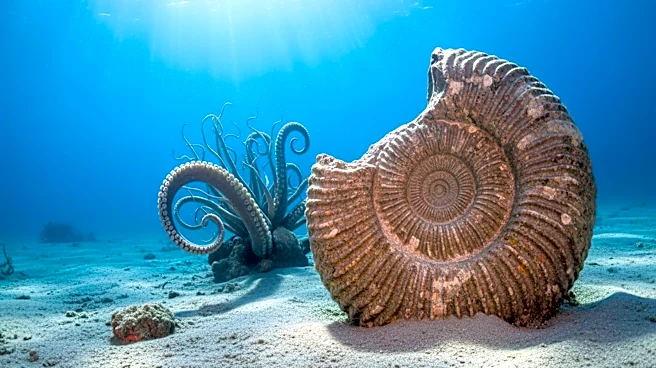
Researchers have found fossil evidence suggesting the existence of colossal octopuses during the Cretaceous period. These ancient octopuses, described as 'kraken-like,' were discovered through the fossilized jaws found in rocks from northern Japan. The study,
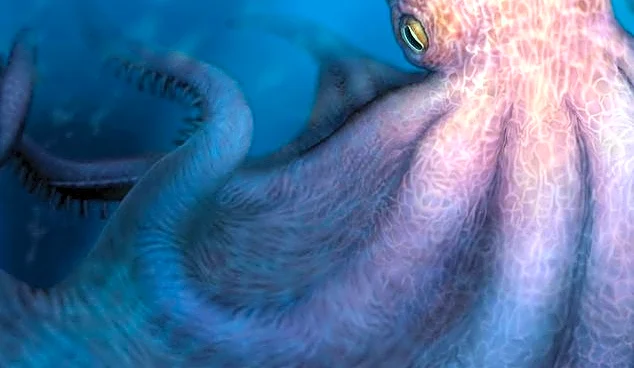
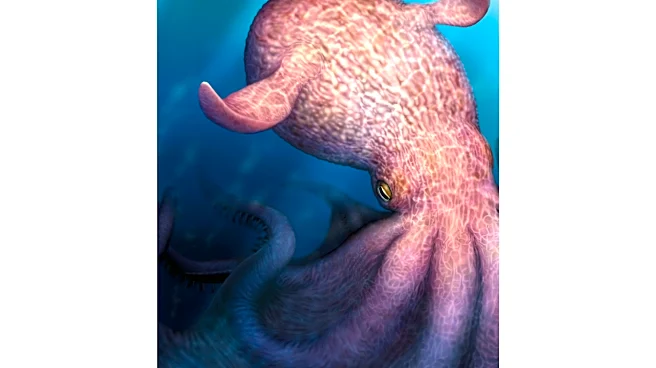
led by paleontologist Jorg Mutterlose from Ruhr University Bochum, indicates that these octopuses were possibly the largest invertebrates ever, rivaling the size of a school bus. The findings suggest these creatures were apex predators, preying on hard-shelled animals. The study also hints at the advanced intelligence of these octopuses, as indicated by the wear patterns on their jaws.
Why It's Important?
The discovery of these colossal octopuses provides new insights into the marine ecosystems of the Cretaceous period. Understanding the role of such large invertebrates in ancient food chains can help scientists reconstruct past oceanic environments and the evolutionary history of marine life. This research highlights the complexity and diversity of ancient marine ecosystems, offering a glimpse into the evolutionary pressures that shaped modern cephalopods. The findings could also influence current studies on marine biodiversity and conservation, as they underscore the importance of preserving diverse marine habitats.