







What's Happening?
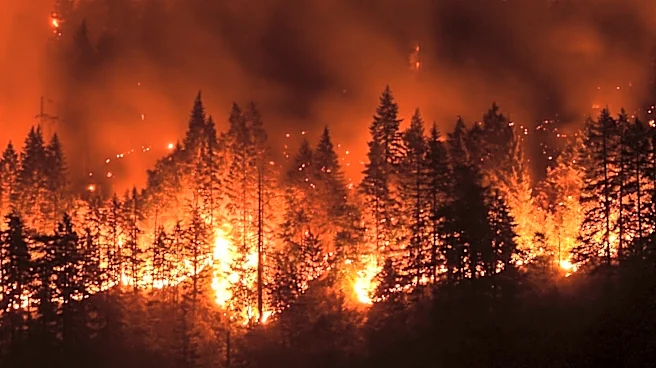
The Air Quality Index (AQI), a tool used to measure air pollution levels, is under scrutiny as wildfires increasingly affect air quality across the United States. The AQI, developed 50 years ago, measures concentrations of five pollutants: particulate
matter, ozone, sulfur dioxide, nitrogen dioxide, and carbon monoxide. These readings are taken from thousands of monitoring stations nationwide and are compared against safety thresholds set by federal standards. However, the AQI has been criticized for its inconsistency and lack of precision, particularly in areas with fewer air-pollution sensors. The index often reports only the highest pollutant concentration, which can misrepresent overall air quality. This issue is compounded by the fact that AQI reports are not standardized across different platforms, leading to confusion among the public.
Why It's Important?
The increasing frequency and intensity of wildfires in the U.S. have made air quality a significant public health concern. The AQI's limitations in accurately reflecting air quality can lead to inadequate public awareness and response to health risks associated with air pollution. This is particularly critical for vulnerable populations, such as those with respiratory conditions, who rely on accurate information to make health-related decisions. The current system's shortcomings highlight the need for improved air quality monitoring and reporting, which could lead to better public health outcomes and more informed policy decisions regarding environmental protection and public safety.
What's Next?
As wildfires continue to pose a threat to air quality, there is a growing need for advancements in air quality monitoring technology and reporting methods. This could involve increasing the number of air-pollution sensors in underserved areas and developing more comprehensive and user-friendly reporting systems. Policymakers and environmental agencies may need to collaborate on revising the AQI to better reflect the complex nature of air pollution and its health impacts. Public education campaigns could also be implemented to help individuals understand and interpret air quality data more effectively.
Beyond the Headlines
The challenges with the AQI reflect broader issues in environmental monitoring and public communication. As climate change exacerbates the frequency of wildfires, there is a pressing need to adapt existing systems to new environmental realities. This situation also underscores the importance of integrating scientific research with public policy to address emerging environmental health challenges. The development of more accurate and accessible air quality information could empower communities to take proactive measures in protecting their health and advocating for environmental justice.