





What's Happening?
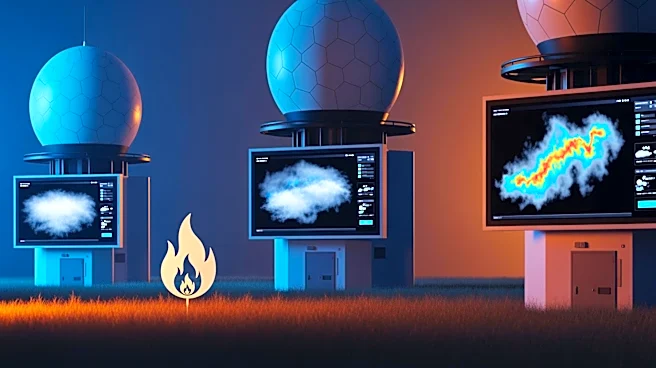
Utilities across the United States are increasingly adopting advanced weather forecasting models to manage wildfire risks more effectively. These models, which offer sub-kilometer resolution, are being integrated into operational decisions to support
public safety power shutoffs and other preventive measures. The demand for such precise forecasting has expanded beyond traditional wildfire-prone areas like California to include regions such as the Carolinas, Tennessee, and New Jersey. Companies like Climavision, Meteomatics, and Technosylva are leading the charge by providing high-resolution forecasts that help utilities make informed decisions about crew mobilization and power shutoffs. These models are crucial for predicting fire behavior in urban areas, which standard models often overlook.
Why It's Important?
The integration of advanced weather forecasting into utility operations is critical for mitigating the impact of wildfires, which are becoming more frequent and destructive. By providing precise and timely forecasts, utilities can better protect infrastructure and communities, reducing the risk of widespread damage and power outages. This approach not only enhances public safety but also helps utilities comply with regulatory requirements and defend their actions in legal contexts. As wildfire risks spread to new regions, the ability to predict and respond to these threats becomes increasingly important for maintaining reliable energy services and safeguarding public welfare.
What's Next?
Utilities are expected to continue investing in advanced forecasting technologies to improve their wildfire risk management strategies. This includes expanding the geographic scope of these models and refining their accuracy and resolution. As the technology evolves, utilities will likely integrate these forecasts into broader grid modernization efforts, enhancing their ability to respond to a range of weather-related challenges. The ongoing development of urban fire behavior models will also play a crucial role in protecting densely populated areas from the devastating effects of wildfires.
Beyond the Headlines
The shift towards advanced weather forecasting highlights a broader trend in utility management, where data-driven decision-making is becoming essential. This approach not only addresses immediate operational needs but also supports long-term planning and investment in resilient infrastructure. As climate change continues to alter weather patterns, utilities will need to adapt by leveraging cutting-edge technologies to anticipate and mitigate risks. This evolution underscores the importance of collaboration between technology providers, utilities, and regulators to ensure that these innovations translate into tangible benefits for society.