








What's Happening?
U.S. Congresswoman Chellie Pingree has introduced the Textile Waste Reduction Act (TWRA), a bill designed to establish a federal framework for reducing textile waste. The proposed legislation mandates federal action, directing the Environmental Protection
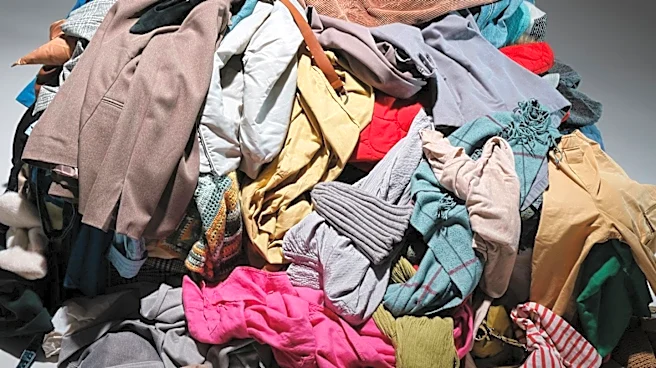
Agency (EPA) to spearhead a coordinated effort. This includes developing a National Textile Circularity Strategy and conducting an assessment of necessary policies, investments, and implementation measures. According to Pingree's office, the bill specifically targets pollution caused by fast fashion and aims to create the first coordinated federal framework to reduce textile waste, improve data collection, and advance circularity within the textile industry. A Government Accounting Office (GAO) report cited by Pingree confirms that textile waste is one of the fastest-growing waste streams in the U.S., largely driven by fast fashion trends. Pingree, who serves as Ranking Member of the House Appropriations Interior, Environment, and Related Agencies Subcommittee, emphasizes the necessity of federal action to address this crisis effectively.
Why It's Important?
The introduction of the Textile Waste Reduction Act is significant for several reasons. Firstly, it acknowledges and seeks to address the escalating environmental impact of textile waste, particularly from fast fashion, which is a major contributor to pollution and resource depletion in the U.S. By establishing a federal framework, the bill aims to create a unified and comprehensive approach to a problem that currently lacks coordinated national oversight. This could lead to more effective waste management strategies, foster innovation in textile recycling and circularity, and potentially reduce the burden on landfills. For U.S. industries, this could mean new regulations and incentives for sustainable practices, potentially shifting manufacturing processes and supply chains towards more environmentally friendly models. Consumers might also see changes in product availability and pricing as companies adapt. The bill's focus on data collection and a national strategy underscores a commitment to evidence-based policy-making, which could lead to more efficient and impactful interventions in the long term. The involvement of the EPA and an Interagency Working Group highlights a multi-faceted approach to tackling this complex issue.
What's Next?
The Textile Waste Reduction Act will now proceed through the legislative process in Congress. This will involve committee reviews, potential amendments, and votes in both the House and Senate. If passed, the bill would then require the EPA Administrator to take coordinated federal action to advance textile circularity. The EPA would be tasked with developing a comprehensive National Textile Circularity Strategy and conducting a needs assessment to identify the necessary actions, investments, and policy priorities for its implementation. An Interagency Working Group on Textile Circularity would be created to coordinate federal activities, and an Advisory Board would provide recommendations. The EPA would also be required to identify and publish federal funding opportunities for states, Tribal governments, local governments, and non-governmental organizations supporting textile circularity, and to annually publish updated data on textile waste generation and management. Stakeholders, including environmental groups, textile manufacturers, and fashion retailers, will likely engage in advocacy efforts to support or modify the bill's provisions.
Beyond the Headlines
Beyond its immediate environmental and economic implications, the Textile Waste Reduction Act touches upon broader societal and cultural shifts. The emphasis on 'fast fashion pollution' highlights a growing awareness of the unsustainable consumption patterns prevalent in modern society. This bill could serve as a catalyst for a more conscious consumer culture, encouraging individuals to consider the lifecycle and environmental footprint of their clothing choices. Ethically, it raises questions about corporate responsibility in the fashion industry and the need for greater transparency in supply chains. Legally, it sets a precedent for federal intervention in waste management beyond traditional municipal solid waste, recognizing textiles as a distinct and significant environmental challenge. The push for a 'circular economy' in textiles could also inspire similar initiatives in other industries, fostering a broader movement towards resource efficiency and waste reduction across the U.S. economy. This legislative effort reflects a growing understanding that environmental sustainability requires systemic changes, not just individual actions.