







What's Happening?
Dr. Stuart Batterman, Professor Emeritus of Environmental Health and Sciences and Global Public Health at the University of Michigan School of Public Health, has provided crucial safety advice in response to the increasing frequency and intensity of wildfires
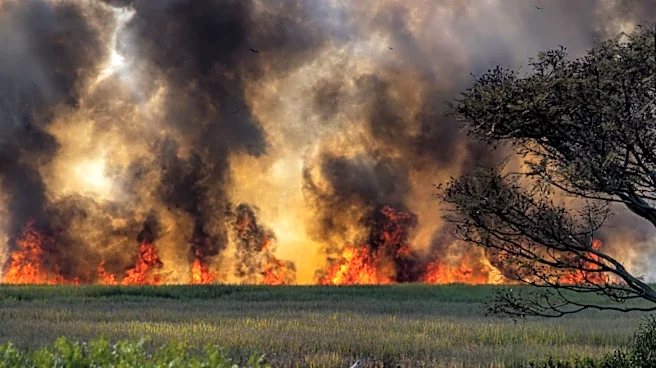
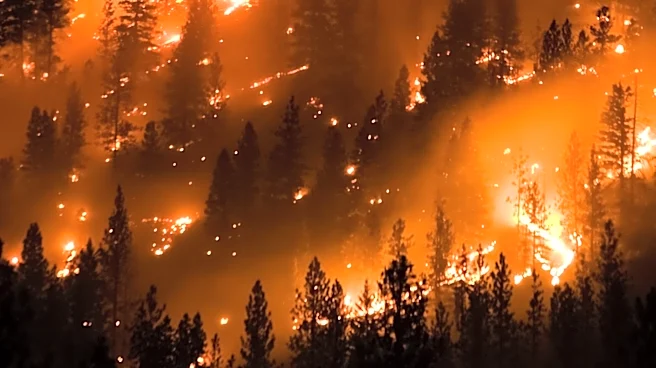
and their impact on air quality. This comes after Ann Arbor experienced unprecedented air quality index (AQI) readings, climbing above 400, with some Detroit area monitors reaching levels never before recorded in Michigan. The smoke, originating from distant Canadian wildfires, contained microscopic PM 2.5 particles that penetrate deep into the lungs, posing significant health risks. Dr. Batterman explained that these events are becoming more common and prolonged, making traditional short-term mitigation strategies less effective. He highlighted that wildfire smoke is not just soot and ash but also contains gases like nitrogen oxides and can increase levels of other pollutants, such as ozone, which is already a concern in southeast Michigan.
Why It's Important?
The escalating frequency and severity of wildfire smoke events, as detailed by Dr. Batterman, represent a significant public health challenge across the U.S., particularly in regions far from the fires themselves. The widespread poor air quality, characterized by high levels of PM 2.5, directly impacts respiratory and cardiovascular health, leading to increased emergency room visits and hospital admissions. Vulnerable populations, including those with pre-existing conditions like asthma, young children, pregnant women, and older adults, are especially susceptible. Furthermore, outdoor workers face compounded threats from both smoke and thermal stress, often without adequate protective measures or legal requirements for breaks and clean air centers. The economic implications include increased healthcare costs and potential disruptions to outdoor labor and activities, underscoring the need for effective public health strategies and infrastructure improvements to protect communities.
What's Next?
In the immediate future, individuals are advised to take proactive steps to minimize exposure to wildfire smoke. Dr. Batterman recommends avoiding smoke exposure, wearing N95 respirators, and staying indoors in cool, filtered air environments. For homes with furnace systems, upgrading to a MERV-13 filter can significantly reduce indoor pollutant levels. For those without central air, a homemade air purifier using a box fan and a MERV-13 filter can be an affordable and effective solution for a single space. Additionally, installing more efficient cabin air filters in vehicles can offer similar protection while driving. Longer-term solutions will likely involve continued research into the complex composition of wildfire smoke and its health effects, as well as policy discussions around protecting vulnerable workers and improving air quality infrastructure in homes and public spaces.
Beyond the Headlines
The recurring and intensifying wildfire smoke events, as discussed by Dr. Batterman, point to deeper societal and environmental challenges beyond immediate health concerns. The phenomenon highlights the interconnectedness of global climate patterns and local air quality, demonstrating how distant environmental disasters can have far-reaching impacts. Ethically, it raises questions about environmental justice, as communities lacking access to air conditioning or advanced filtration systems are disproportionately affected. The reliance on individual protective measures, while necessary, also underscores a potential gap in public policy and infrastructure to address widespread environmental hazards. This situation may accelerate the demand for more resilient urban planning, improved building codes to incorporate better air filtration, and comprehensive public health campaigns to educate and protect citizens from the long-term consequences of poor air quality.