
What's Happening?
China's clean power stations are increasingly vulnerable to extreme weather events exacerbated by climate change, according to recent reports. In April 2025, large areas of China experienced high winds,
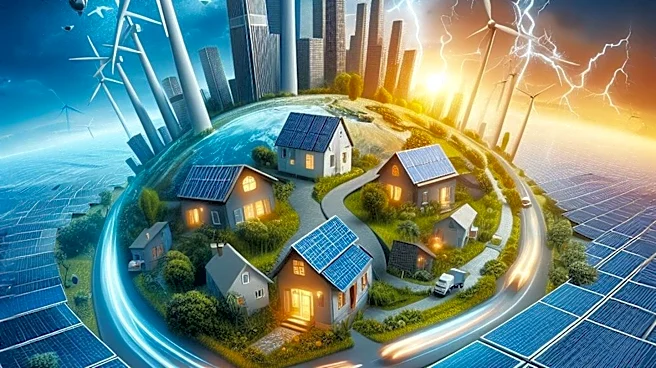
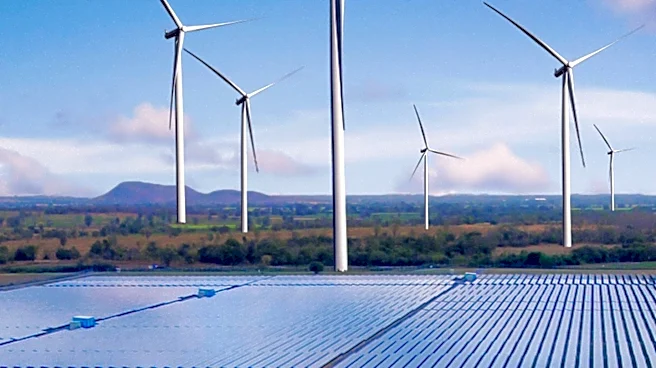
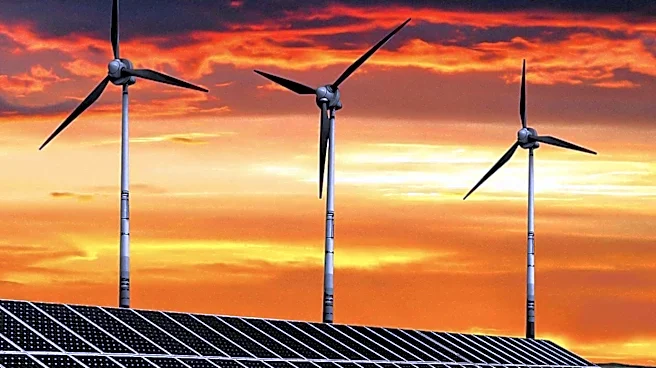
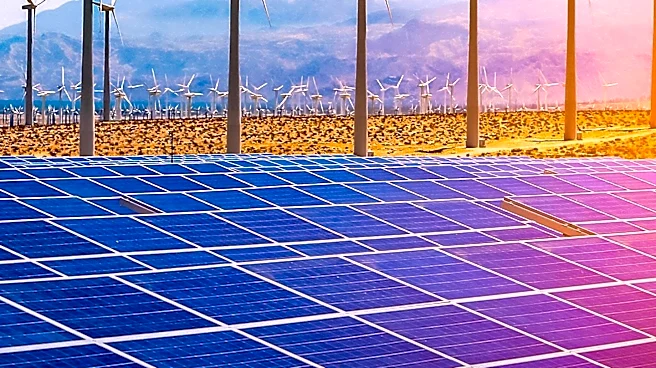
sandstorms, cold waves, rainstorms, and blizzards, causing widespread damage to solar panels and 1,100 power lines, leaving 1.35 million households without power. While strong winds increased wind power generation by over 40%, sand, rain, and snow reduced solar power output by approximately 20%. Sustained high temperatures decrease solar panel efficiency, and strong winds and typhoons pose a significant threat to wind turbines, as evidenced by Typhoon Yagi in September 2024, which knocked over turbines and caused millions in damages. Experts warn that the longer-term effects of changing sunshine, wind, and rainfall patterns are unpredictable, necessitating resilient design and location for clean power equipment.
Why It's Important?
The challenges faced by China's clean power infrastructure have direct relevance to the U.S., which is also heavily investing in renewable energy as part of its climate strategy. As the U.S. expands its solar and wind energy capacity, it must confront similar vulnerabilities to extreme weather events. The experiences in China highlight the critical need for the U.S. to design and implement climate-resilient renewable energy systems, considering factors like wind resistance for solar panels and turbines, temperature impacts on efficiency, and protection against severe precipitation. Failure to do so could lead to significant economic losses, grid instability, and hinder the nation's transition to clean energy, impacting energy security and public policy goals.
What's Next?
The report suggests that clean power plants, while designed to reduce global heating, must also be resilient to the extreme weather events that climate change brings. Experts recommend that clean power equipment needs to be designed and located to address unpredictable long-term changes in sunshine, wind, and rainfall patterns. This implies a future where U.S. energy policy and infrastructure development will need to incorporate advanced climate modeling and engineering solutions to ensure the reliability and longevity of renewable energy assets. There will likely be increased research and development into more robust materials and designs, as well as strategic siting of power facilities to minimize exposure to climate risks.
Beyond the Headlines
The vulnerability of clean energy infrastructure to climate change presents a paradox: the very solutions meant to combat climate change are themselves threatened by its effects. This deeper implication underscores the need for a holistic approach to climate action, where mitigation efforts are coupled with robust adaptation strategies. Ethically, it raises questions about the responsibility of energy developers and policymakers to ensure that the transition to clean energy is not only sustainable but also secure and equitable, especially for communities reliant on these energy sources. Legally, it could lead to new regulations and standards for climate resilience in renewable energy projects. Culturally, it reinforces the understanding that climate change impacts every sector, demanding integrated and forward-thinking solutions.