







What's Happening?
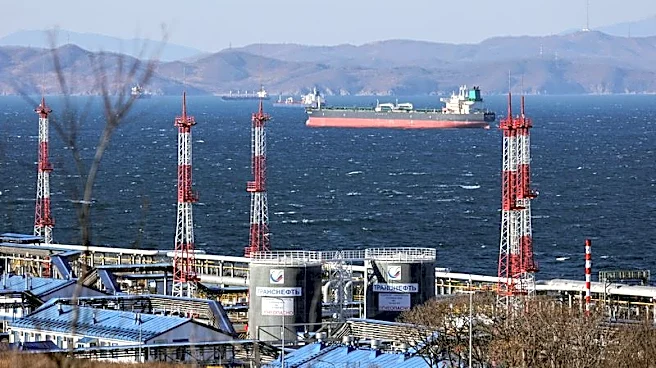
The ongoing war in Ukraine has significantly impacted global maritime shipping, leading to increased importance of land logistics in intercontinental transport. This situation presents an opportunity for Central Asian states to establish a new trade route
architecture, leveraging their geographical position as a strategic asset. However, achieving this requires addressing intra-regional connectivity issues, which could strengthen Central Asia's position in its relations with major powers. Recent discussions in Istanbul involved representatives from Uzbekistan, Turkmenistan, Türkiye, Georgia, Azerbaijan, and Kyrgyzstan, who signed an agreement to further develop the CASCA+ corridor, aiming to increase the flow of goods, including transit traffic to the EU.
Why It's Important?
The development of new trade routes in Central Asia is crucial for enhancing the region's connectivity and integration into global supply chains, potentially accelerating economic growth. The geographical remoteness of Central Asia from open seas poses logistical challenges, increasing transport costs and reducing export volumes. Addressing these issues through improved intra-regional connectivity could mitigate the region's logistical disadvantages and strengthen its geopolitical significance. The involvement of major powers like China and the EU in infrastructure projects highlights the strategic importance of Central Asia's transport sector.
What's Next?
Central Asian states need to adopt a regional strategy for developing transport corridors and establish a single coordinating body to manage infrastructure projects effectively. This approach could prevent unhealthy competition and duplication of efforts, ensuring mutually beneficial cooperation. Attracting investment in transport infrastructure and digitalizing transportation processes are essential steps for improving regional connectivity. The establishment of a Regional Center for Transport and Communications Connectivity under the UN's auspices has been proposed to facilitate these efforts.
Beyond the Headlines
The geopolitical tensions affecting maritime shipping globally are increasing the importance of Central Asian trade routes, stimulating investment interest from countries like China, the EU, Japan, South Korea, and Gulf states. However, limited mutual coordination among Central Asian states in infrastructure projects funded by external actors could lead to rivalry and reduce their influence over regional transport geopolitics. A consolidated regional strategy is necessary to manage geographic location effectively and improve transport logistics.