
What's Happening?
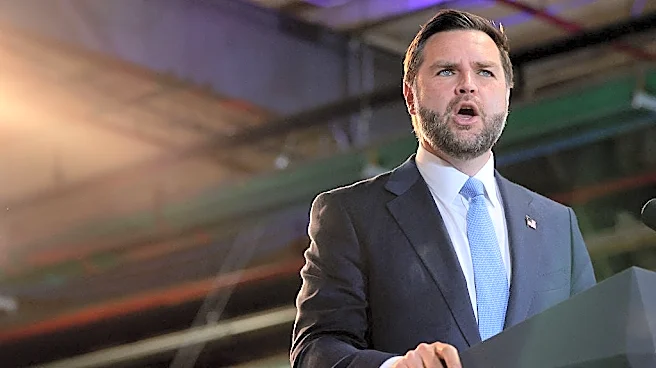
Vice President JD Vance recently visited Maine, where he publicly lauded Senator Susan Collins, a Republican, for her independent stance, despite her occasional opposition to the Trump administration.
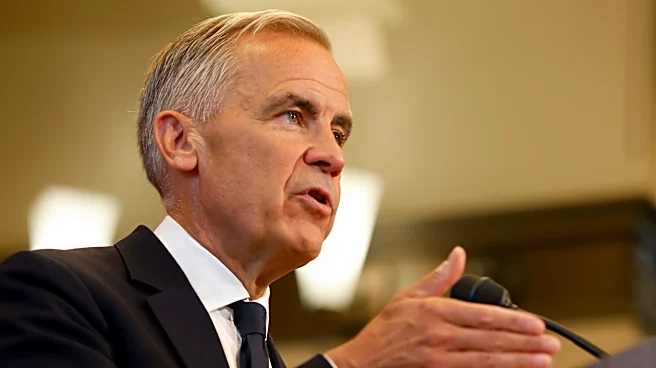
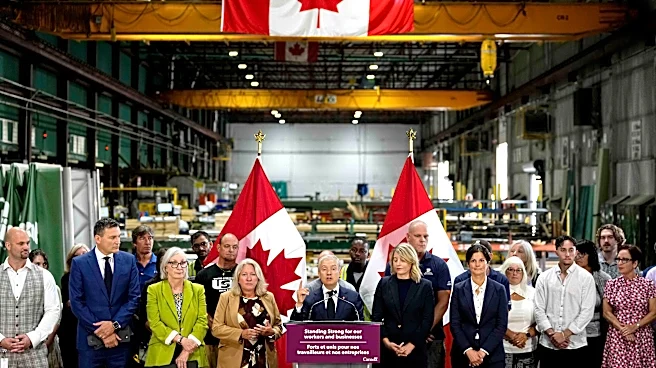
Vance's remarks were made at a manufacturing facility in Brewer, during an appearance that Senator Collins herself did not attend, citing a scheduling conflict. Vance highlighted Collins's role as the 'most independent member' of the Senate, acknowledging that her independence sometimes complicates his job as President of the Senate. This comes as Senator Collins is engaged in a tight re-election campaign against Democrat Troy Jackson, who currently holds a slight lead in recent polling. Collins has also recently criticized President Trump's trade war with Canada, emphasizing the importance of the economically beneficial relationship with the neighboring country.
Why It's Important?
This event underscores the complex political dynamics within the Republican party, particularly in states where President Trump's approval ratings may be underwater. Vice President Vance's praise for Senator Collins, despite her independent streak and occasional disagreements with the Trump administration, suggests a strategic effort to unify the Republican base while also appealing to moderate voters. For Senator Collins, her absence from the rally and her public criticism of President Trump's trade policies allow her to maintain an image of independence, which is crucial in a state that former Vice President Kamala Harris won by a significant margin in 2024. The outcome of Collins's re-election battle is vital for Republicans' aspirations to retain control of the Senate, making the balancing act between party loyalty and independent appeal a critical factor in her campaign.
What's Next?
Senator Collins will continue her re-election campaign against Democrat Troy Jackson, with the election scheduled for November. Her strategy will likely involve further emphasizing her independent credentials and her focus on Maine-specific issues, potentially distancing herself from more controversial aspects of the Trump administration's agenda. The Trump administration, through figures like Vice President Vance, may continue to offer strategic endorsements that aim to bolster Republican candidates in competitive races, even if those candidates have shown independence. The ongoing trade dispute with Canada, which Senator Collins has publicly opposed, could also become a more prominent issue in the campaign, influencing voter sentiment in a border state like Maine.
Beyond the Headlines
The dynamic between Vice President Vance and Senator Collins reveals a broader trend in contemporary U.S. politics where traditional party lines are increasingly blurred by individual candidate strategies and regional political landscapes. Collins's ability to maintain an independent image while still being a crucial part of the Republican effort to control the Senate highlights the evolving nature of political alliances and the importance of local voter sentiment over strict party adherence. This situation also reflects the challenges faced by national political figures in campaigning for candidates who may need to differentiate themselves from the national party brand to succeed in their respective states. The emphasis on 'independence' could become a more common theme in future elections, as candidates seek to appeal to a wider electorate.