







What's Happening?
Iranian Foreign Minister Abbas Araghchi has embarked on a diplomatic mission to discuss a proposal for reopening the Strait of Hormuz while deferring nuclear talks with the United States. This initiative comes amid heightened tensions and ongoing military
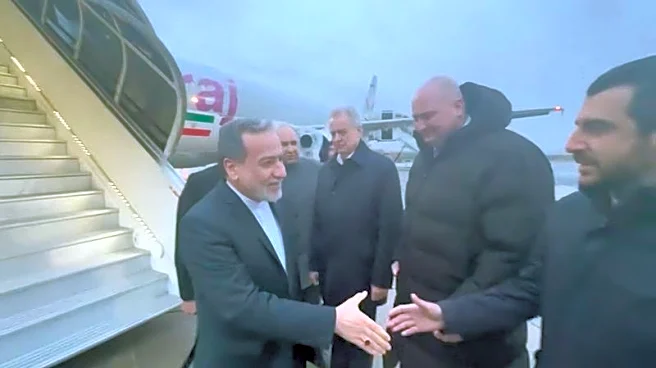
operations between the U.S. and Iran. Araghchi's diplomatic efforts included meetings with Russian President Vladimir Putin and officials in Pakistan and Oman. The discussions focused on regional security and the potential for a settlement, with nuclear issues set aside for later. The U.S. has not confirmed the details of Iran's proposal, and President Trump has reiterated that Iran must not acquire nuclear weapons. The diplomatic efforts are under a time constraint, as President Trump faces a May 1 deadline to obtain congressional authorization to continue military operations against Iran.
Why It's Important?
The proposal to reopen the Strait of Hormuz is significant as it is a critical chokepoint for global oil shipments, and its closure has impacted energy exports from Gulf countries. Iran's diplomatic outreach aims to secure regional and international support, potentially easing tensions in the Middle East. However, the U.S. remains firm on its stance against Iran's nuclear ambitions, creating a complex diplomatic landscape. The outcome of these negotiations could influence regional stability, energy markets, and U.S.-Iran relations. The involvement of countries like Russia and Pakistan highlights the geopolitical stakes and the potential for broader international engagement in resolving the conflict.
What's Next?
The next steps involve continued diplomatic efforts, with Pakistan playing a mediating role between Iran and the U.S. The May 1 deadline for U.S. congressional authorization looms, adding urgency to the negotiations. President Trump's upcoming meeting with Chinese President Xi Jinping may also influence the diplomatic dynamics. The Gulf states, particularly Saudi Arabia, are key players in the region and their response to Iran's proposal will be crucial. The potential for further talks and a resolution depends on the willingness of all parties to compromise and address the broader security concerns in the region.
Beyond the Headlines
The situation underscores the strategic importance of the Strait of Hormuz and the broader implications of U.S.-Iran relations on global energy security. Iran's outreach reflects a shift in its diplomatic strategy, seeking to build regional alliances and reduce isolation. The involvement of Russia and other regional players indicates a multipolar approach to Middle Eastern diplomacy. The outcome of these negotiations could set a precedent for future diplomatic engagements in the region, highlighting the interconnectedness of security, energy, and geopolitical interests.