




What's Happening?
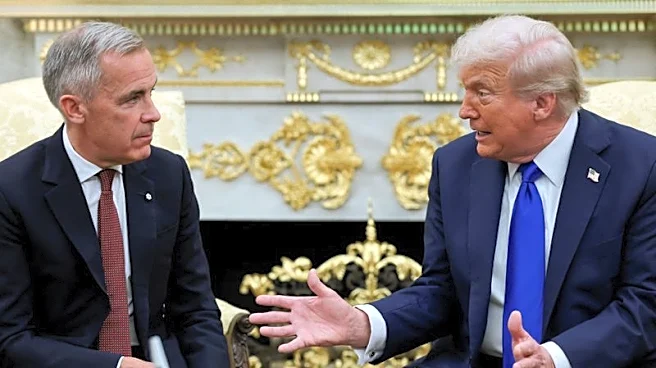
President Trump has announced a pause on the implementation of new tariffs as the United States and Canada work towards finalizing a trade agreement. This decision comes amidst ongoing negotiations between the two nations, aiming to resolve trade disputes
and establish new terms for economic cooperation. The pause in tariffs indicates a potential de-escalation of trade tensions that have characterized parts of the relationship between the U.S. and Canada during President Trump's administration. The move is seen as a strategic step to facilitate the successful conclusion of the agreement, which is expected to have significant implications for cross-border trade and economic stability. The specifics of the agreement being finalized are anticipated to address various sectors and trade practices.
Why It's Important?
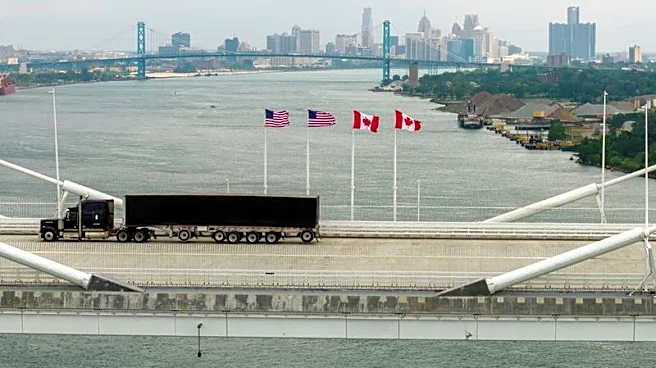
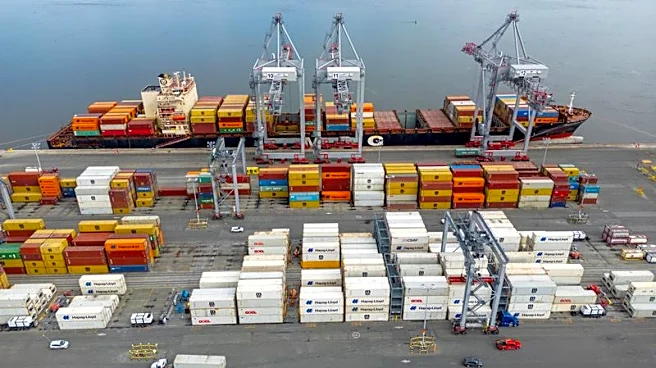
This pause in tariffs is significant for both the U.S. and Canadian economies, as it signals a potential resolution to trade uncertainties that have impacted industries in both countries. For U.S. businesses, particularly those reliant on cross-border supply chains and exports to Canada, the removal of tariff threats can provide much-needed stability and predictability. Conversely, Canadian industries that faced retaliatory tariffs or increased costs due to U.S. tariffs stand to benefit from this development. The finalization of a new trade agreement could reshape economic relationships, potentially leading to increased trade volumes, investment, and job creation in sectors like manufacturing, agriculture, and technology. It also reflects the ongoing efforts to balance protectionist measures with the benefits of international trade agreements.
What's Next?
The immediate next step involves the finalization of the trade agreement between the U.S. and Canada. Once finalized, the agreement will likely undergo review and approval processes in both countries, which could involve legislative bodies. Stakeholders, including industry leaders, labor unions, and consumer groups, will closely monitor the details of the agreement to assess its impact on their respective interests. The implementation of the agreement will then dictate the future of trade relations, potentially leading to adjustments in business strategies, investment decisions, and market dynamics. The success of this agreement could also set a precedent for future trade negotiations with other international partners, influencing global trade policies.
Beyond the Headlines
Beyond the immediate economic implications, President Trump's decision to pause tariffs and pursue a finalized agreement with Canada carries broader geopolitical and diplomatic significance. It reflects the complex interplay between economic policy and international relations, where trade tools are often used as leverage in diplomatic negotiations. This move could be interpreted as an effort to strengthen alliances and foster regional economic stability, particularly in North America. It also highlights the evolving nature of trade agreements in a globalized world, where traditional trade barriers are being re-evaluated in favor of more integrated and mutually beneficial frameworks. The outcome of this agreement could influence future approaches to international trade, emphasizing cooperation over confrontation in economic diplomacy.