



What's Happening?
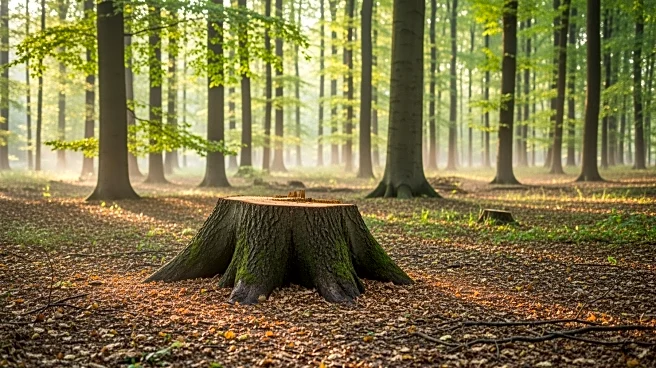
Natural Resources Wales (NRW) has initiated a significant tree felling operation in Fforest Fawr, near Tongwynlais, due to the presence of ash dieback, a fungal disease that severely weakens ash trees. This operation, scheduled throughout February 2026,
necessitates the closure of several popular walking trails, including the Sculpture Discovery Trail and the Three Bears Cave Walk. Chris Rees, the forest operations team leader for NRW, emphasized the importance of public safety, stating that the weakened trees pose a risk of falling. The operation involves the removal of approximately 286 trees, primarily ash, but also includes some larch, beech, and sweet chestnut trees. The use of large forestry machinery and the establishment of extensive safety zones make it unsafe to allow public access during the felling process.
Why It's Important?
The ash dieback tree felling operation in Fforest Fawr highlights the ongoing challenges posed by this fungal disease, which threatens ash tree populations across the UK. The closure of popular trails impacts local tourism and recreational activities, affecting both residents and visitors. This operation underscores the broader environmental and economic implications of tree diseases, as they necessitate costly and disruptive interventions to ensure public safety. The removal of diseased trees is crucial to prevent potential accidents, but it also raises concerns about biodiversity loss and the long-term health of forest ecosystems. The situation calls for increased awareness and proactive measures to manage and mitigate the effects of tree diseases.
What's Next?
Following the completion of the tree felling operation, NRW will likely focus on replanting efforts to restore the affected areas and maintain the ecological balance in Fforest Fawr. The organization may also engage in public education campaigns to raise awareness about ash dieback and other tree diseases. Additionally, there could be discussions on implementing more robust monitoring and management strategies to prevent similar situations in the future. Stakeholders, including local communities and environmental groups, may advocate for increased funding and research to address the root causes of tree diseases and enhance forest resilience.