





What's Happening?
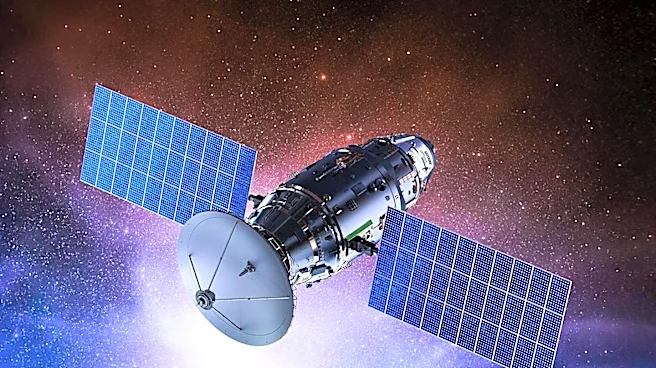
The U.S. Space Force has awarded Northrop Grumman a contract to design and construct a prototype satellite for the Geosynchronous Space Situational Awareness Program Hybrid Operations and Resilient Technology – Responsive (GHOST-R) mission. This initiative
aims to enhance space domain awareness by monitoring, tracking, and characterizing spacecraft and orbital debris in geosynchronous Earth orbit (GEO). The GHOST-R program builds upon existing Space Force capabilities, such as the Geosynchronous Space Situational Awareness Program (GSSAP) constellation, but introduces a hybrid procurement model. This new approach combines commercial satellite bus manufacturing with specialized military optical and radio frequency sensors to accelerate deployment. Northrop Grumman's prototype design will leverage commercial smallsat bus manufacturing processes to expedite assembly and testing, incorporating high-resolution optical tracking payloads, onboard processing avionics, and software-defined communications arrays for continuous object tracking in high-altitude orbits. The prototype spacecraft is engineered to operate in or near GEO, approximately 35,786 kilometers above Earth’s equator, and will include automated threat-detection algorithms.
Why It's Important?
This contract signifies a strategic shift in how the U.S. Space Force procures and deploys critical space assets, moving towards more agile and cost-effective solutions. By integrating commercial satellite bus manufacturing with military-grade sensors, the Space Force can reduce development cycles and accelerate the deployment of advanced space domain awareness capabilities. This is crucial given the increasing congestion and adversary activity in geosynchronous Earth orbit, which hosts vital military communications, early-warning missile detection, and commercial broadcast satellites. The ability to rapidly deploy and replace modular prototype tranches enhances constellation resilience, moving away from reliance on a few high-cost surveillance assets. This approach directly addresses the need to counter unannounced orbital maneuvers and protect national security assets from co-orbital threats, ultimately strengthening the U.S.'s ability to maintain situational awareness and protect its interests in space.
What's Next?
Northrop Grumman will proceed with platform integration, payload manufacturing, and ground segment testing at its primary space systems facilities. The prototype satellite is slated to undergo flight qualification before its planned integration with a U.S. Space Force launch manifest. The ultimate goal is to demonstrate responsive GEO surveillance capabilities in orbit. The successful deployment and operation of this prototype could pave the way for broader adoption of hybrid procurement models within the Space Force, potentially influencing future satellite acquisition strategies. This development is also likely to be closely watched by other nations and commercial space entities, as it could set a precedent for how advanced space capabilities are developed and deployed in an increasingly contested orbital environment. The Space Force will continue to monitor and adapt its strategies in response to evolving threats and technological advancements in space.
Beyond the Headlines
The shift towards hybrid procurement models and the integration of commercial technologies into military space assets represents a broader trend of convergence between the commercial and defense sectors in space. This approach not only offers cost efficiencies and faster deployment but also fosters innovation by leveraging the rapid advancements in the commercial space industry. However, it also introduces complexities related to supply chain security, data integrity, and the potential for dual-use technologies. The deployment of advanced space domain awareness capabilities, while crucial for national security, also raises questions about the militarization of space and the potential for an arms race. The development of automated threat-detection algorithms and continuous tracking capabilities underscores the increasing reliance on artificial intelligence and autonomous systems in space operations, which carries its own set of ethical and operational considerations regarding decision-making in orbit.