
What's Happening?
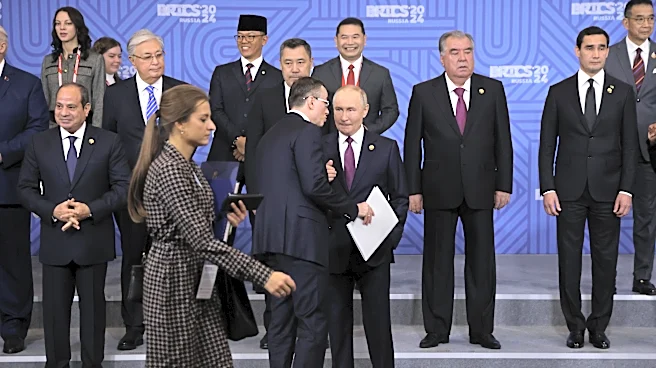
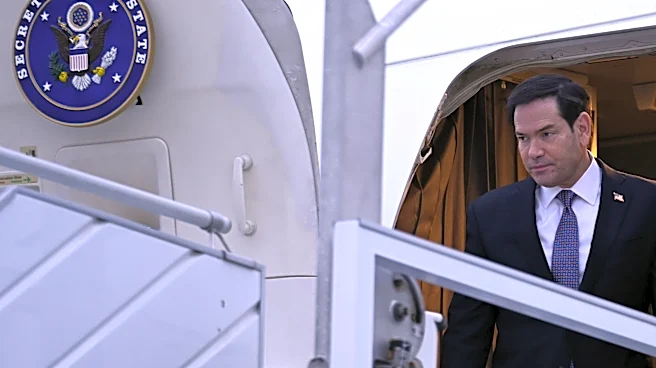
China is actively maintaining communication with relevant parties regarding a potential trilateral summit involving the leaders of China, Russia, and the United States. This confirmation came from Chinese
Foreign Ministry spokesman Guo Jiakun on Tuesday, in response to inquiries about a Wall Street Journal report. The report had suggested that there were differences concerning the proposed summit's format and agenda. Guo Jiakun, however, did not provide any specific details regarding these reported differences or any other specific issues related to the summit at this time. His remarks indicate that discussions are ongoing at a diplomatic level to explore the feasibility and modalities of such a high-level meeting among the three global powers.
Why It's Important?
A trilateral summit involving China, Russia, and the United States would represent a significant diplomatic undertaking with profound implications for global geopolitics. Such a meeting could serve as a platform to address a wide range of pressing international issues, including regional conflicts, economic stability, and strategic arms control. For the U.S., engaging in such a summit could offer an opportunity to manage complex relationships with both China and Russia simultaneously, potentially de-escalating tensions or finding common ground on critical global challenges. Conversely, disagreements on format and agenda, as reported, highlight the inherent complexities and divergent interests among these nations. The success or failure of such a summit could redefine international power dynamics and influence future multilateral cooperation or competition.
What's Next?
The immediate next steps involve continued diplomatic communications among China, Russia, and the U.S. to iron out differences regarding the summit's format and agenda. The lack of specific details from China's Foreign Ministry suggests that these discussions are likely in preliminary stages and sensitive. Key stakeholders, including the respective foreign ministries and national security advisors, will likely be engaged in intricate negotiations to establish common ground. The outcome of these preparatory talks will determine whether a trilateral summit can materialize and what its potential scope might be. International observers will be closely watching for any further announcements or indications of progress, as the very prospect of such a meeting signals a potential shift in global diplomatic engagement.
Beyond the Headlines
The mere discussion of a trilateral summit among China, Russia, and the U.S. underscores a growing recognition of the interconnectedness of global challenges and the need for engagement among major powers, despite their often-conflicting interests. This initiative could be seen as an attempt to establish a new framework for global governance or at least a mechanism for managing great power competition. The reported differences over format and agenda are not merely procedural; they likely reflect fundamental disagreements on priorities, power dynamics, and the very nature of the international order. For instance, the U.S. might seek to address issues like strategic stability or regional security, while China and Russia might prioritize economic cooperation or a challenge to existing unipolar structures. The eventual shape of any such summit, or its failure to materialize, will offer significant insights into the current state of international relations and the willingness of these powers to cooperate on a grand scale.