



What's Happening?
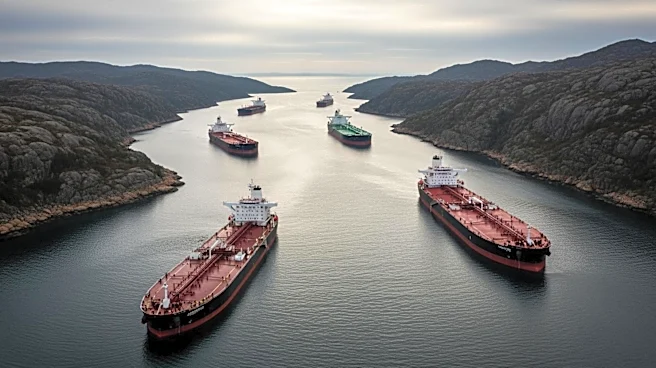
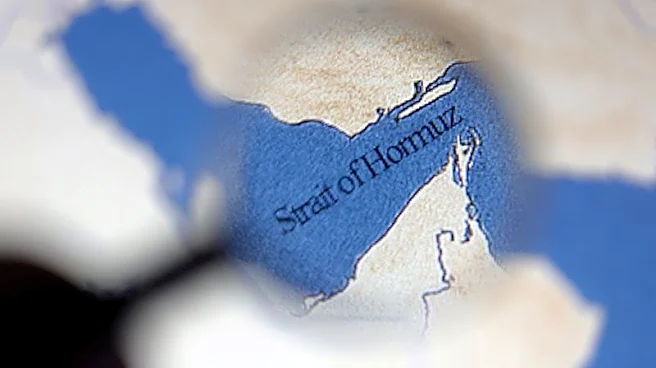
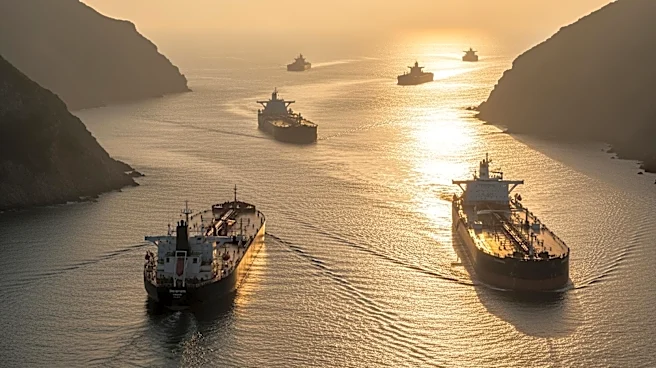
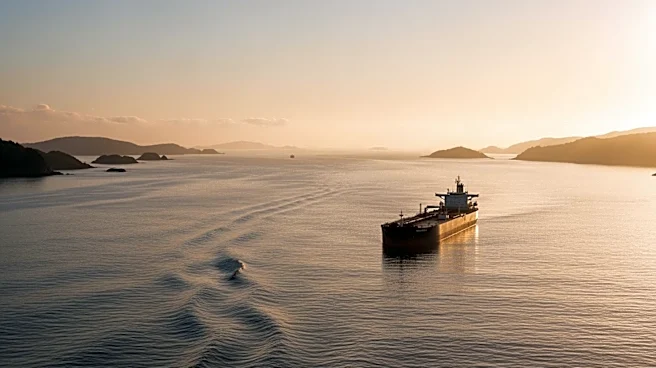
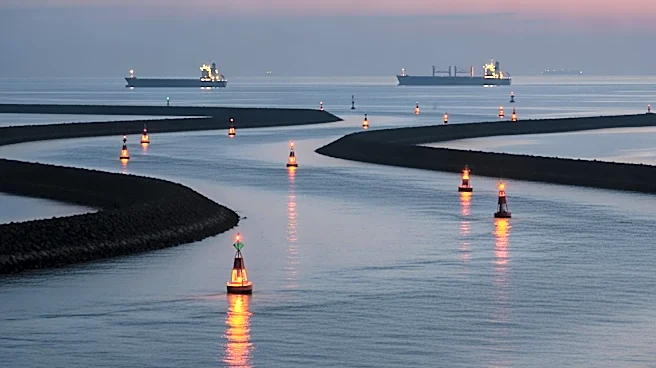
Three supertankers carrying oil have successfully navigated the Strait of Hormuz amid a fragile ceasefire between the United States and Iran. This development comes after Iran's blockade of the strait, a critical chokepoint for global oil and liquefied
natural gas shipments, which had significantly disrupted energy supplies and driven up oil prices. The tankers, including the Liberia-flagged VLCC Serifos and China-flagged VLCCs Cospearl Lake and He Rong Hai, bypassed Iran's Larak Island and are en route to destinations in Malaysia and China. The ceasefire has allowed hundreds of tankers, previously stuck in the Gulf, to begin exiting the area, although many remain waiting for clearance.
Why It's Important?
The passage of these tankers through the Strait of Hormuz is a significant development in the context of global energy security. The strait is a vital artery for the transportation of about 20% of the world's oil, and any disruption can have far-reaching impacts on global oil prices and energy markets. The ceasefire between the US and Iran, although fragile, provides a temporary reprieve from escalating tensions that have threatened to destabilize the region further. This development is crucial for countries dependent on oil imports, as it may help stabilize oil prices and ensure a steady supply of energy resources.
What's Next?
The continuation of the ceasefire is critical for maintaining the flow of oil through the Strait of Hormuz. Stakeholders, including international energy companies and governments, will be closely monitoring the situation to assess the stability of the truce. Any breakdown in the ceasefire could lead to renewed blockades and further disruptions in oil supply, potentially causing another spike in global oil prices. Diplomatic efforts may be necessary to ensure the ceasefire holds and to negotiate a more permanent resolution to the tensions in the region.